
Custom patient
portal development
services
Get a secure, FHIR-interoperable portal, built to match your team’s real workflows. Patient portal software development at MindK combines specialty practice expertise and AI to build software that treats users with the same care you treat patients.
Trusted by




Built for workflows where standard portals fail
Why compromise between a patchwork of generic products and custom solutions that are too expensive to build and maintain? MindK leverages pre-built components, open-source tools, and AI-driven development to make custom-fit portals truly affordable for healthcare teams.
Tailor-made for specialty practices
When intake, triage, follow-up, or care navigation is specific to the specialty, MindK portals reflect the way care is actually delivered, so patients and staff can move through it without friction.
Zero EHR-side limitations and workarounds
We move workflows into a cleaner operational layer for teams living with awkward scheduling logic, clumsy messaging, buried documents, or limited proxy access.
Consistent patient experience
Keep intake, communication, care delivery, and follow-up aligned so patients undertake one coherent journey instead of a patchwork of disconnected vendor flows.
Visibility for revenue and ops teams
When billing, payer, provider, and patient workflows depend on the same status signals, a custom portal tightens data capture, reduces handoff gaps, and makes the workflow easier to manage.
One workflow layer to connect your systems
Tie your EHR/EMR, CRM, billing, payer, telehealth, and internal systems in a way that keeps data moving where people need it and supports the workflow across teams.
A portal foundation that you can actually control
Launch a white-label portal that your customers can make their own without forcing your team into a custom rebuild every time. We provide a reusable foundation that supports tenant-specific branding, flexible roles, partner-specific workflows, and future expansion from a single codebase.

Our patient portal development services
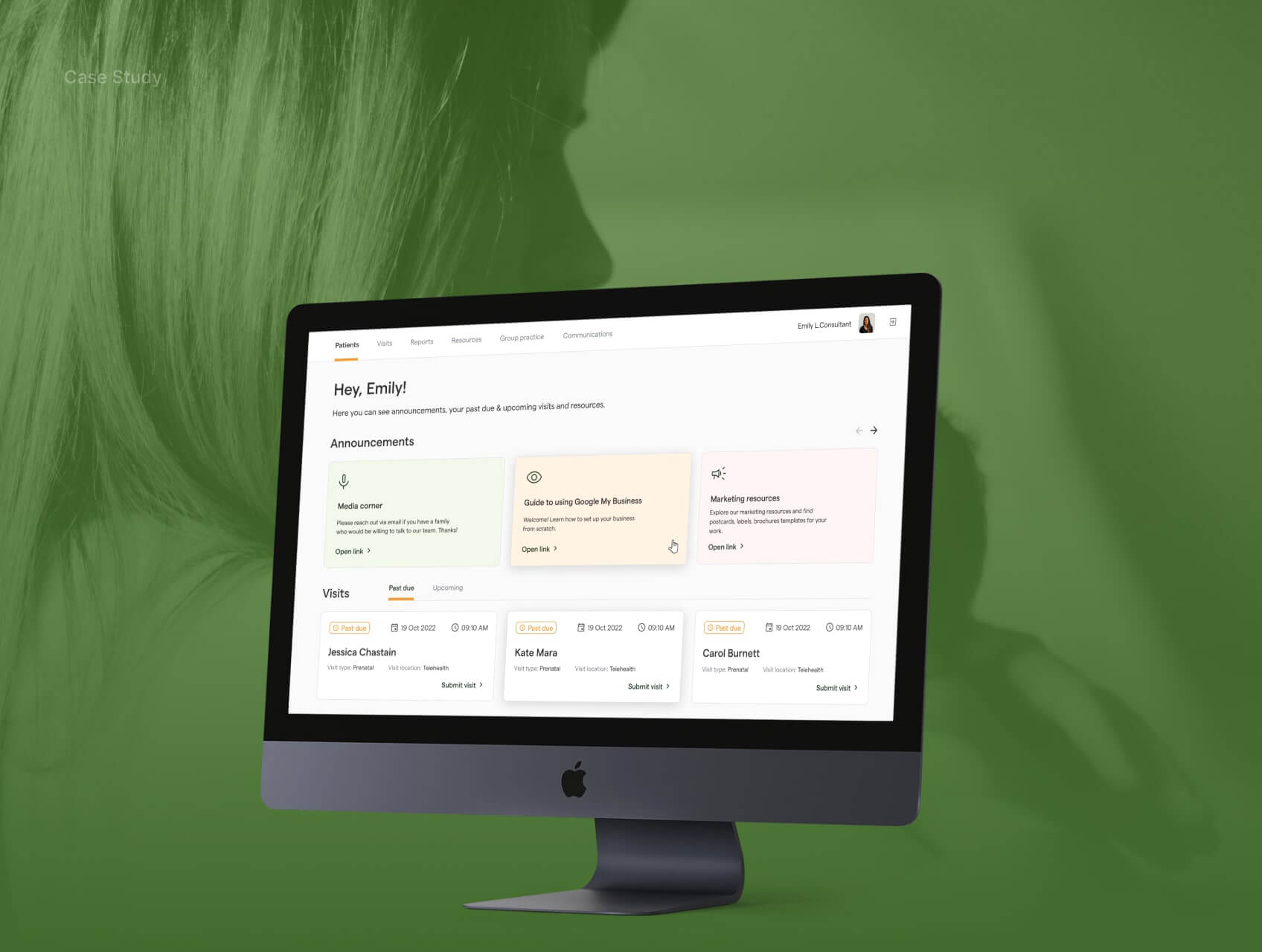



Core Features of Our Custom Patient Portals
For provider groups
- Registration and intake forms
- Multi-step surveys
- Online appointment scheduling
- Secure messaging
- Results and notes access
- Document upload
- Caregiver and proxy access
- Provider dashboards
- Workflow-specific permissions
- Audit-friendly activity history
For RCM, billing, and payer-adjacent workflows
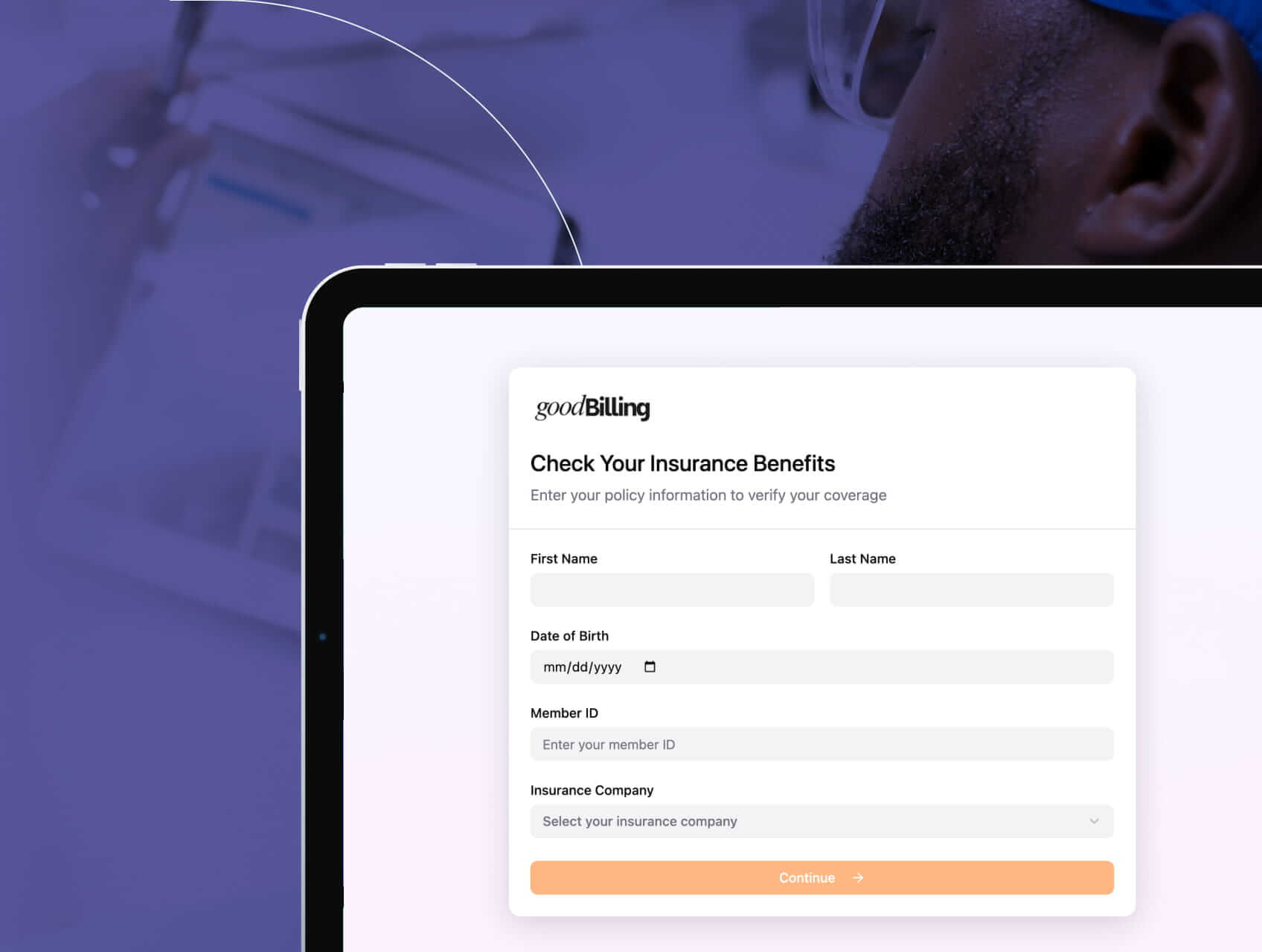
- Insurance and coverage data capture
- Eligibility and verification flows
- Medical billing & payments
- Cost estimates
- Case status visibility
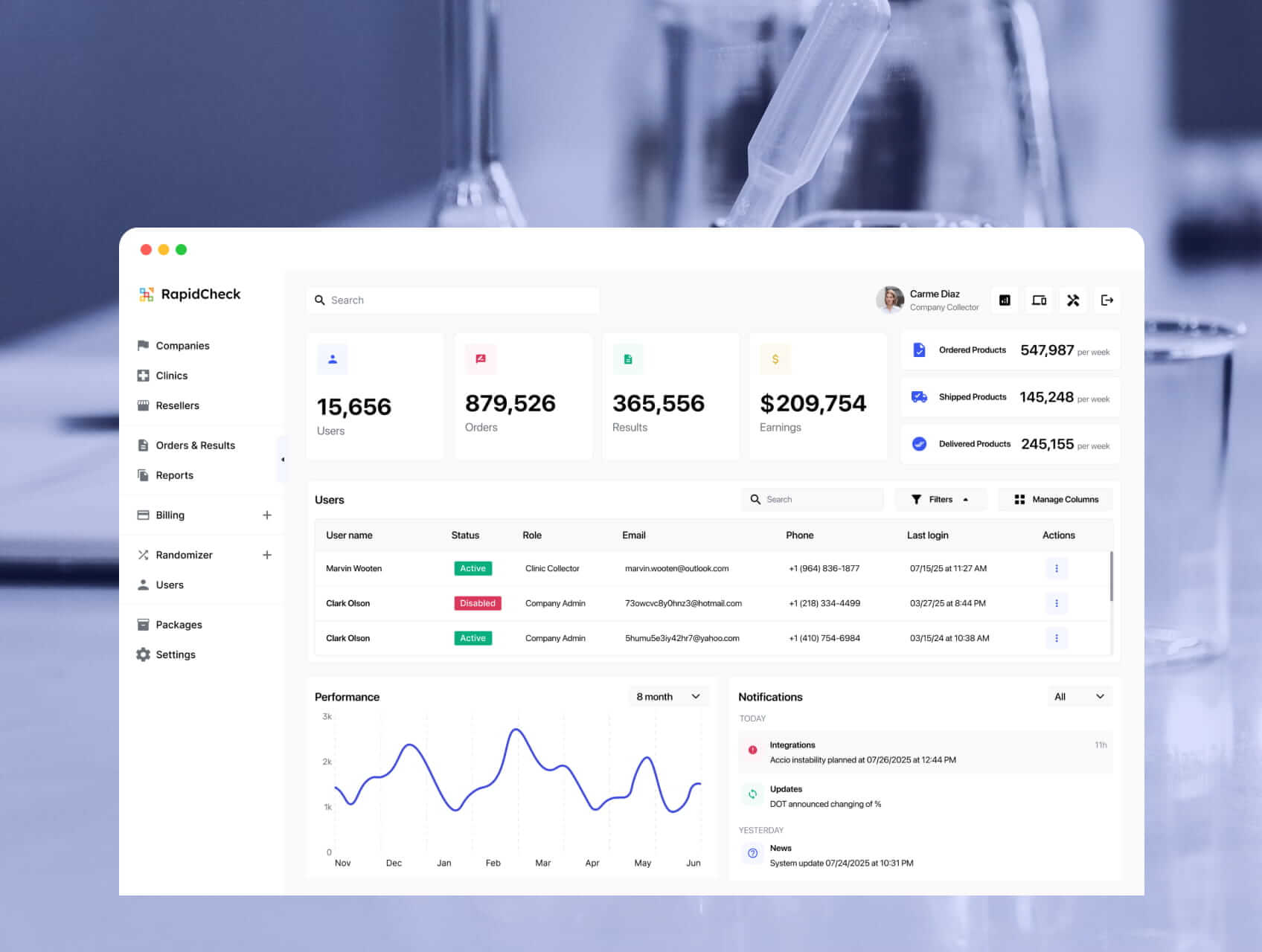
- Operational dashboards
- Coordination across patient, provider, and back-office teams
- Claim-ready data handoff
For digital health products
- Patient engagement journeys
- Telehealth handoff
- In-app and push notifications
- Multi-role access
- Branded product experiences
- Consent collection
- Admin controls for content and workflow changes
For specialty care platforms
- Differentiated care journeys
- Workflow-specific intake and follow-up
- Role-aware access for patients and care teams
- Specialty-specific product experiences
- Care coordination workflows
- E-prescriptions & refill requests

How We Build Custom Patient Portals
Discovery and workflow mapping
Meet with the team of healthcare experts to understand your needs and design a tailor-made solution. Workshops with a proxy Product Owner and an experienced Solution Architect will help you map user needs, workflows, integration requirements, constraints, and risks early. AI captures meeting transcripts, structures requirements, turns raw notes into workflow diagrams, and generates multiple design concepts.
Duration: 1 to 3 weeks.
Architecture and integration planning
Once the workflow is clear, the team defines the system architecture, integration approach, data flows, and security boundaries before the build starts. For patient portal development, this includes working through EHR/EMR integrations, identity, messaging, billing, audit trails, and PHI boundaries early enough to avoid expensive redesign later.
Duration: 2 to 3 weeks.
MVP portal development
Highest-value workflows are prototyped first, then built into an MVP during short cycles lasting 2-3 weeks. Each sprint covers backlog refinement, planning, design, implementation, QA, review, and retrospective. AI clears up user stories, suggests acceptance criteria and edge cases, accelerates boilerplate coding against MindK’s internal standards, assists with debugging, as well as generates unit and integration tests.
Duration: 5 to 10 weeks
Production rollout
After the MVP is stable, the focus shifts to security hardening, user testing, performance tuning, and release preparation. AI helps us translate acceptance criteria into business-test scenarios, strengthen end-to-end coverage, speed up release documentation, and rollout preparation. The team can validate real user journeys before broader launch and continue the portal improvement.
Duration: 2 to 4 weeks.
Support & maintenance
AI helps us reduce maintenance in the most costly and time-consuming areas. These include regression testing, release notes, technical documentation, troubleshooting, and monitoring support. Because documentation stays closer to the code and tests are generated earlier in the cycle, the team can make changes with less rework and better visibility.
Duration: ongoing.
How to start with patient
portal development
Focused discovery
Accelerated portal development
A perfect model for teams that need a custom portal built faster with a team of one Solution Architect and a part-time Product Owner. AI reduces delivery overhead across planning, implementation, testing, and QA while experienced specialists stay responsible for decisions and quality.
Team augmentation
White-label development

Technologies Behind Our
Patient Engagement Solutions
-
 React
React - Node.js
-
 NestJS
 - TypeScript
- AWS Lambda
- API Gateway
- Amazon Cognito
- Amazon S3
- CloudFront
- Amazon RDS
- Amazon Aurora
- Amazon SQS
- Amazon SNS
- Amazon EventBridge
- CloudWatch
-
 CloudTrail
 - Terraform
- Terragrunt
-
 Vanta
Vanta



HIPAA-Compliant Patient Portal Architecture
Robust access control
Encryprion & PHI protection
HIPAA-aware from day one
Want to learn about MindK's compliance?
Seamless EHR/EMR Integrations
Connect EHR, EMR, CRM, and billing systems
Use FHIR and HL7 where standards matter
Keep data in sync across workflows
Extend the portal through third-party APIs

Why healthcare providers choose MindK
Specialty care knowledge
Build around real care and ops workflows, from intake and scheduling to eligibility, claims handoffs, telehealth, and permissions.
FHIR interoperability
Connect EHR or EMR, CRM, payer, billing, telehealth, identity, and internal systems with standards-based data exchange.
AI-enabled delivery
Build a production-grade MVP 20%–60% faster with a team of one Solution Architect and a part-time Product Owner.
End-to-end partnership
We bring together 15 years of strategy expertise, UX, engineering, QA, DevOps, security, and integrations, so the portal ships as a working product.
What
our
clients
say
-

Allison Erickson
Director of Product, The Lactation Network
USA Such quality work in such efficient timing
«I have nothing but great things to say about our partnership with MindK and the solid work they have done and continue to do for the growth of our company. Our rapport is strong which is a reflection of their professionalism, hard work, and great outputs.»
-

Jason Lutton
CEO, International Surrogacy Center
Impressed with their ability to understand our industry
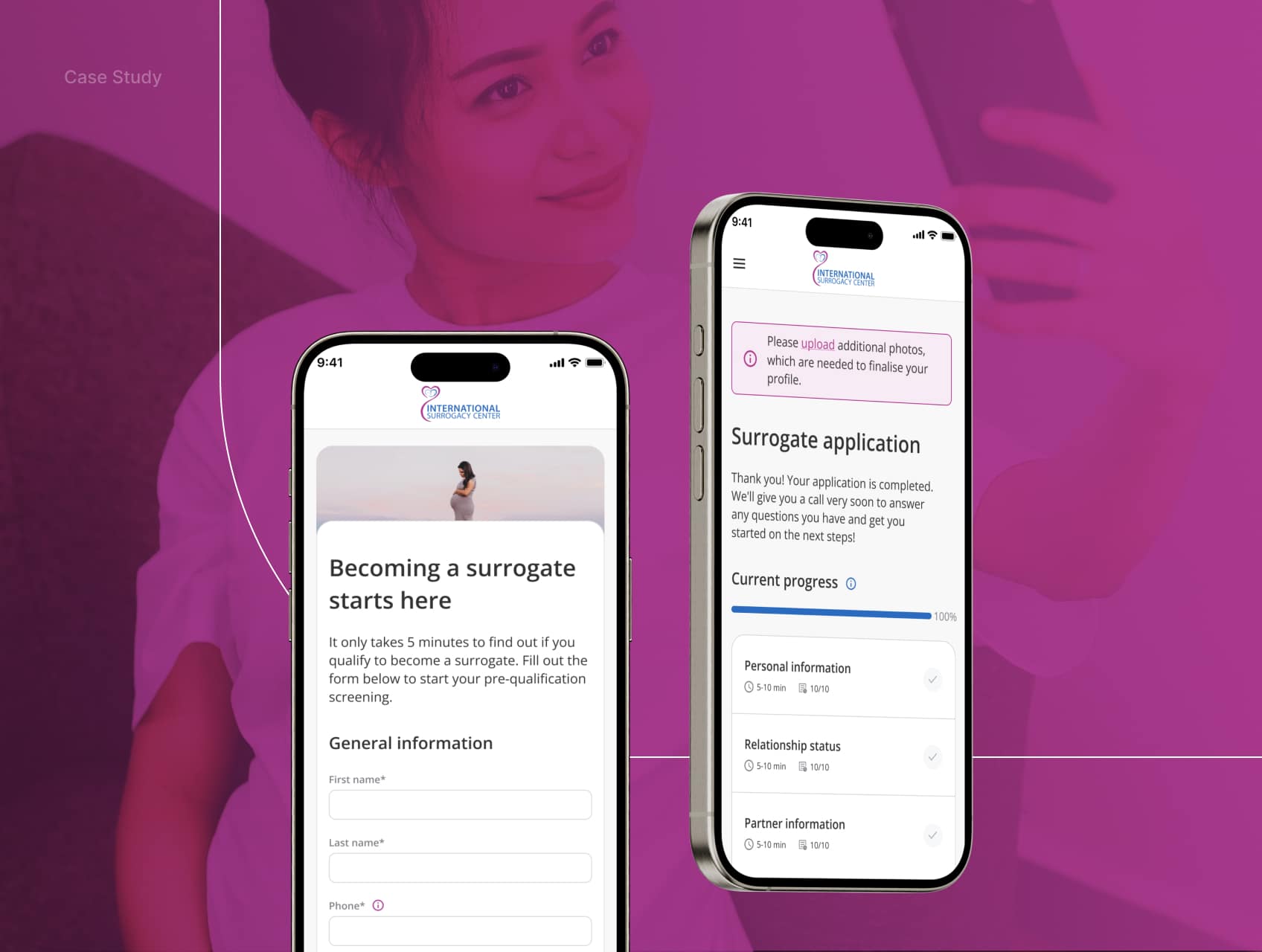
«MindK reduced the time a surrogate takes to complete an online application, increased the number of completed applications, and streamlined our intake process, resulting in fewer staff man hours needed to complete the backend processes for finalizing an applicant.»
-

Al Hariri
Co-Founder, Vitagene
USA Results-oriented and
outcome-driven«I can tell you confidently that they are different from your regular agency that just wants to charge as much money for their work as they can get away with. MindK is completely results-oriented and outcome-driven.»
-

Zaheer Mohiuddin
Co-Founder, Levels.fyi
USA This isn't your typical outsourcing shop
«The quality of work and the interactions with the team felt akin to anyone that I've worked within the Bay Area in technology. MindK's expertise is for real and the bar is high. This isn't your typical outsourcing shop, MindK has top-notch engineers and PMs.»




Ready to Improve Your
Patient Experience?
Let us know about your challenges and we'll contact you within
24 hours to arrange a free consultation with our team.
Our Healthcare Tech Insights

FAQ
- When does custom make more sense than an EHR portal or white-label vendor?
Custom patient portal development makes more sense when the workflow itself is the problem. That usually means specialty intake, multi-role permissions, payer or billing coordination, cross-system handoffs, or product requirements that break inside standard modules. If your main need is basic access to common portal functions, a standard option may be enough. If the workflow is already leaking into spreadsheets, manual re-entry, or side-channel tools, custom starts making more economic sense.
- How long does a portal MVP usually take?
A production-ready MVP often takes a few months when the scope is disciplined, and the highest-value workflow is identified early. MindK’s delivery model is explicitly built to shorten planning, implementation, testing, and release cycles with AI assistance under senior oversight.
- Can you work with our existing EHR, CRM, billing stack, or internal APIs?
Yes. That is a core part of the work.
- How do you handle HIPAA-aware design?
By treating privacy and security as workflow and architecture questions from the start. HHS frames the Security Rule around administrative, physical, and technical safeguards, and the Privacy Rule’s minimum necessary standard requires teams to limit access and disclosure to what the job actually requires. In practice that means role design, proxy rules, least privilege, logging, encryption, segmentation, and secure identity flows.
- Can the portal support white-label or multi-tenant use cases?
Yes, when that requirement is part of the product model. Custom portal architecture is often the right path when you need multi-tenant branding, organization-specific roles, or partner-specific workflow variations that standard portals rarely support cleanly.
- Should this be a web portal, patient app, or both?
Start with the workflow, not the container. If the critical work is intake, messaging, scheduling, results, billing, or care coordination, a responsive web portal is often enough for the first release. If you need heavy mobile engagement, push-driven journeys, or offline behavior, an app may be worth adding. Many teams start with the portal layer and expand once usage shows where mobile adds real value.
- Can you work alongside our internal product and engineering teams?
Yes. Team augmentation is a good fit when the internal team owns the product but needs help with healthcare workflows, architecture, interoperability, security, or delivery acceleration. That model works especially well for in-flight projects that need targeted expertise rather than a full handoff.