AI-Powered, End-to-End RCM
Automation Platform

Cloud-native application

Business need

GoodBilling set out to eliminate one of the biggest sources of friction in revenue cycle management: uncertainty and manual work across eligibility checks, verification of benefits (VoB), documentation, coding alignment, and claim creation. Their goal was to build a system that could scale to hundreds of thousands of claims per month while keeping human oversight to a minimum.

Result

MindK partnered with GoodBilling to design and build a solution that automates the entire flow from patient intake and benefits verification to EMR integration and claim generation. A team of 10 specialists across engineering, project management, data engineering, and DevOps delivered the first production version in 5 months, while meeting strict healthcare security and privacy requirements.

Industry
Healthcare
Location
USA
USA
Working together since
2025

The scope covered full product build (architecture → infrastructure → integrations → AI/automation → production rollout).

The challenge

RCM automation is fragmentary. Patient benefit details are incomplete, inconsistent, or buried inside payer portals and phone trees. Self-funded plans often require manual follow-up. Providers want accurate patient cost estimates before care is delivered. And even if coverage data is available, it rarely makes it back into the EMR in a usable form. Ultimately, claim creation being disconnected from clinical documentation results in denials, rework, and delayed reimbursement.

The solution

MindK built an end-to-end verification of benefits (VOB) and billing platform. It combines patient-facing intake, real-time eligibility checks, agentic VoB for complex/self-funded plans, deep EMR integrations, and automated claim creation based on signed clinical notes.

Out-of-pocket cost estimation
Matching of patient context and pay codes
Claims generation pipeline
Bidirectional EMR integration
AI model anonymization
Portal and voice AI Agents
HIPAA-compliant infrastructure

Patient-Facing Eligibility Link

For every provider, the platform generates a dedicated eligibility check link that can be embedded on the client’s website. Patients can enter insurance details, relevant existing conditions, risk factors/history that impacts preventive vs. medical coverage.

Patient-Facing Eligibility Link

For every provider, the platform generates a dedicated eligibility check link that can be embedded on the client’s website. Patients can enter insurance details, relevant existing conditions, risk factors/history that impacts preventive vs. medical coverage.

Through a patient portal, this intake becomes the structured foundation for VoB, cost estimation, and downstream billing logic.

Out of Pocket Cost Estimation

At the end of the flow, the patient receives an estimate of what they should expect to pay out-of-pocket. Setting expectations before the appointment reduces onboarding friction and improves conversion.

Out of Pocket Cost Estimation

At the end of the flow, the patient receives an estimate of what they should expect to pay out-of-pocket. Setting expectations before the appointment reduces onboarding friction and improves conversion.

Intelligent Benefits Verification

For many fully funded plans, the system returns benefits immediately using a comprehensive eligibility check workflow. If the plan is self-funded or otherwise requires deeper verification, the system automatically routes the case into an agentic verification queue

Intelligent Benefits Verification

For many fully funded plans, the system returns benefits immediately using a comprehensive eligibility check workflow. If the plan is self-funded or otherwise requires deeper verification, the system automatically routes the case into an agentic verification queue

The queue retrieves benefits programmatically via payer portals (agent-driven navigation and data capture) and phone calls (voice agent + IVR navigation). Only when automated methods fail does a human step in as a last-resort fallback.

Matching Patient Context to Payable Codes

After benefits are verified, the platform consolidates preventive and medical coverage details, patient conditions, diagnoses, family history, and referral context (when present).

Matching Patient Context to Payable Codes

After benefits are verified, the platform consolidates preventive and medical coverage details, patient conditions, diagnoses, family history, and referral context (when present).

Based on this, GoodBiling determines which billing pathways and CPT codes are valid for that specific patient scenario. This is where the system becomes a coverage intelligence that actively guides billing decisions.

Bidirectional integration with major EMR systems

MindK built integrations with the top 10 EMR systems in the space. The platform pushes verified policy and coverage data back into the EMR, so the provider sees it within their normal workflow. No separate portals or manual re-entry needed.

Bidirectional integration with major EMR systems

MindK built integrations with the top 10 EMR systems in the space. The platform pushes verified policy and coverage data back into the EMR, so the provider sees it within their normal workflow. No separate portals or manual re-entry needed.

Webhooks Triggered by Signed Clinical Notes

We implemented a webhook mechanism for EMRs. Once the clinical note is created and signed, it extracts and normalizes key clinical documentation signals, cross-references the note against verified policy data, and intended CPT codes.

Webhooks Triggered by Signed Clinical Notes

We implemented a webhook mechanism for EMRs. Once the clinical note is created and signed, it extracts and normalizes key clinical documentation signals, cross-references the note against verified policy data, and intended CPT codes.

The system generates a complete claim without provider input. This closes a major RCM gap: ensuring that documentation and billing logic are continuously aligned.

Anonymizer service for HIPAA compliant AI processing

MindK built a dedicated anonymizer service for agentic AI rocessing of clinical notes and claim scrubbing. The service depersonalizes and anonymizes PHI, sending only the minimum necessary structured content to third-party models. When needed, it supports controlled re-linking inside a secure environment.

Anonymizer service for HIPAA compliant AI processing

MindK built a dedicated anonymizer service for agentic AI rocessing of clinical notes and claim scrubbing. The service depersonalizes and anonymizes PHI, sending only the minimum necessary structured content to third-party models. When needed, it supports controlled re-linking inside a secure environment.

In-Environment Model Hosting for Sensitive Tasks

For critical workflows such as plan-type identification, we deployed a hosted model within a HIPAA-compliant environment to avoid unnecessary exposure and keep critical classification logic contained.

In-Environment Model Hosting for Sensitive Tasks

For critical workflows such as plan-type identification, we deployed a hosted model within a HIPAA-compliant environment to avoid unnecessary exposure and keep critical classification logic contained.

Payer Portal AI Agents

We developed AI agents capable of navigating payer portals end-to-end. They extract the required benefit fields and return structured outputs or policy logic and cost estimation.

Payer Portal AI Agents

We developed AI agents capable of navigating payer portals end-to-end. They extract the required benefit fields and return structured outputs or policy logic and cost estimation.

Voice Agents That Navigate IVR and Talk to Payer Support

MindK also built a proprietary voice agent solution that can place calls to payers, navigate IVR call trees, conduct full conversations with payer customer support, capture and structure the benefits data points needed to complete verification.

Voice Agents That Navigate IVR and Talk to Payer Support

MindK also built a proprietary voice agent solution that can place calls to payers, navigate IVR call trees, conduct full conversations with payer customer support, capture and structure the benefits data points needed to complete verification.

The voice agent is essential for payers and plan types where portal automation isn’t sufficient.

Secure, HIPAA-compliant infrastructure
from day one

MindK implemented a HIPAA-compliant infrastructure using AWS-native services and hardened operational protocols. Key principles included strong security for in transit and at rest, segmented services for PHI vs non-PHI processing, and operational controls designed for healthcare-grade environments.

Encryption keys for data at rest, envelope encryption (AWS KMS)
App secrets, API keys, rotating secrets (AWS Secrets Manager)
Principle of least privilege (AWS IAM, IAM Identity Center)
Edge protection for intake and admin portal (AWS WAF, AWS Shield)
Audit logs (AWS CloudTrail) and config drift (AWS Config)
Authentication for patient intake and portal (Amazon Cognito)
Sensitive data detection (Amazon GuardDuty, Security Hub, Inspector, Macie)
Observability metrics, logs, alarms (CoudWatch), distributed tracing (AWS X-Ray)
Virtual Private Cloud with private subnets, NAT, security groups, NACLs

Services provided

Business analysis

Product management

Custom software development

AI agent development

Test automation

DevOps

Tech stack

  • Node.js Node.js
  • React React
  • AWS lambda AWS lambda
  • Amazon Aurora Amazon Aurora
  • DynamoDB DynamoDB
  • ElastiCache ElastiCache
  • S3 S3
  • Amazon OpenSearch Amazon OpenSearch
  • AWS Glue AWS Glue
  • Amazon Athena
  • AWS KMS AWS KMS
  • AWS Secrets Manager AWS Secrets Manager
  • IAM Identity Center IAM Identity Center
  • AWS WAF AWS WAF
  • AWS Shield
  • Cognito Cognito
  • CloudTrail CloudTrail
  • AWS Config AWS Config
  • Amazon GuardDuty Amazon GuardDuty
  • AWS Security Hub AWS Security Hub
  • Amazon Inspector
  • CloudWatch CloudWatch
  • AWS X-Ray
  • Amazon VPC

Business value

MindK delivered a system that turns one of healthcare’s most manual processes into a scalable, reliable pipeline. The platform allows GoodBilling to automatically process hundreds of thousands of claims per month. At the same time, providers can enjoy a smooth patient onboarding and reduced operational burden.
1
Claims processed automatically per month
1
Reduction in effort for edge cases where automation fails
1
Something, somethig else

Work with experts in heathcare

Let us know about your technology challenges and we'll
help you resolve them.
More case studies

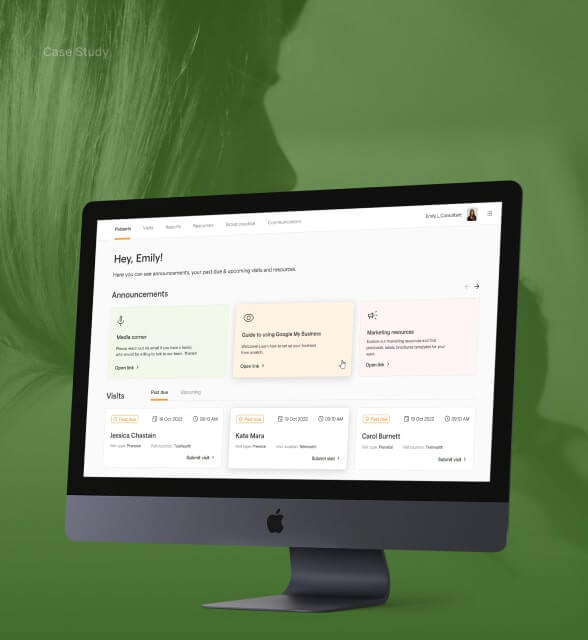
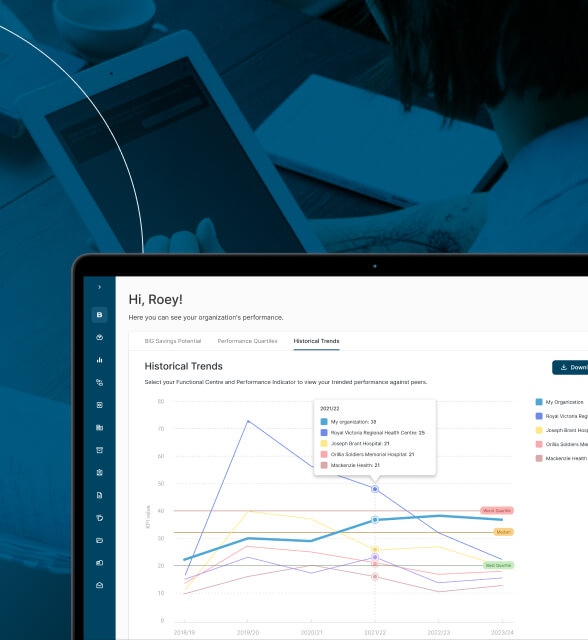
Healthcare Big Data Analytics

BIG Healthcare

Learn more

The Lactation Network

The First EMR for Lactation Consultants

Learn more

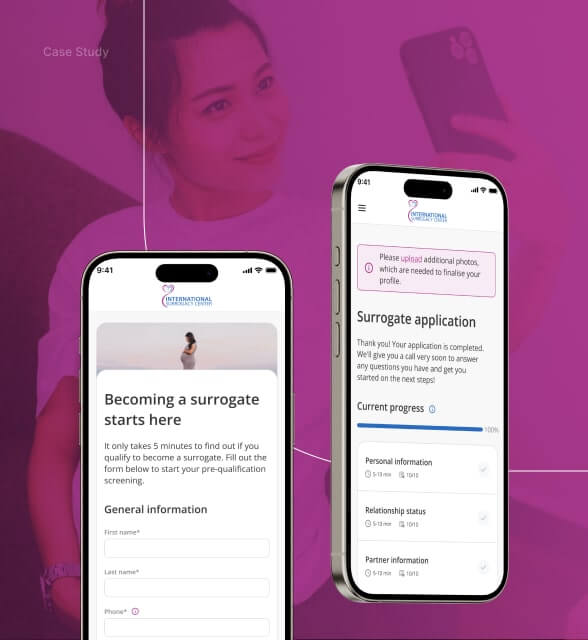
International Surrogacy Center

Cloud-Native Medical System for Surrogate Parents

Learn more