




Generative AI
Consulting Services
Transition from chaotic experiments to production-ready AI agents and well-measured ROI. MindK’s generative AI consulting services help you overcome hidden roadblocks that prevent change using a responsible, data-first approach.
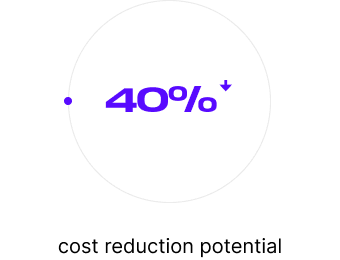
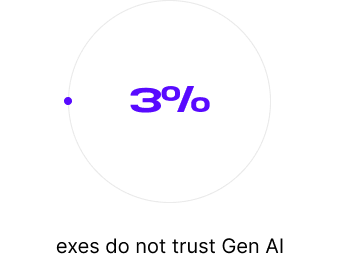
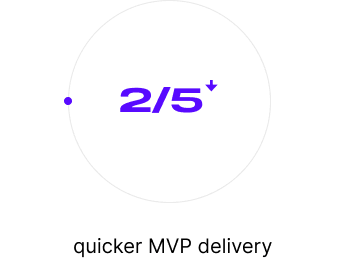
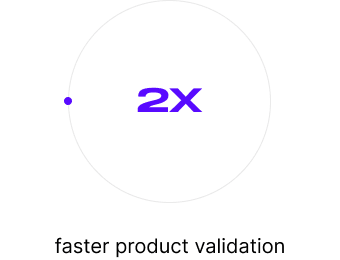
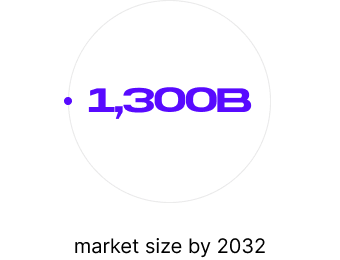
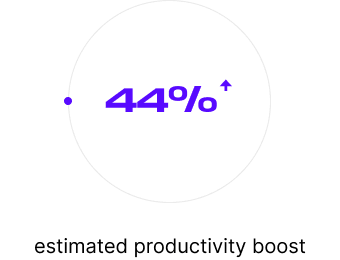
Generative AI in numbers

What Generative AI Can Do for Your Business
Sales and revenue
Customer experience
Software engineering
Operations and finance
HR and internal knowledge
Marketing and content

Build 4x faster with our ready to use AI agents and building blocks
Unstructured Data Normalization
Converts messy emails, PDFs, scanned forms, free-text notes, and spreadsheets into clean structured records your systems can query. Removes the manual re-keying that slows every downstream process.
Voice Call Automation
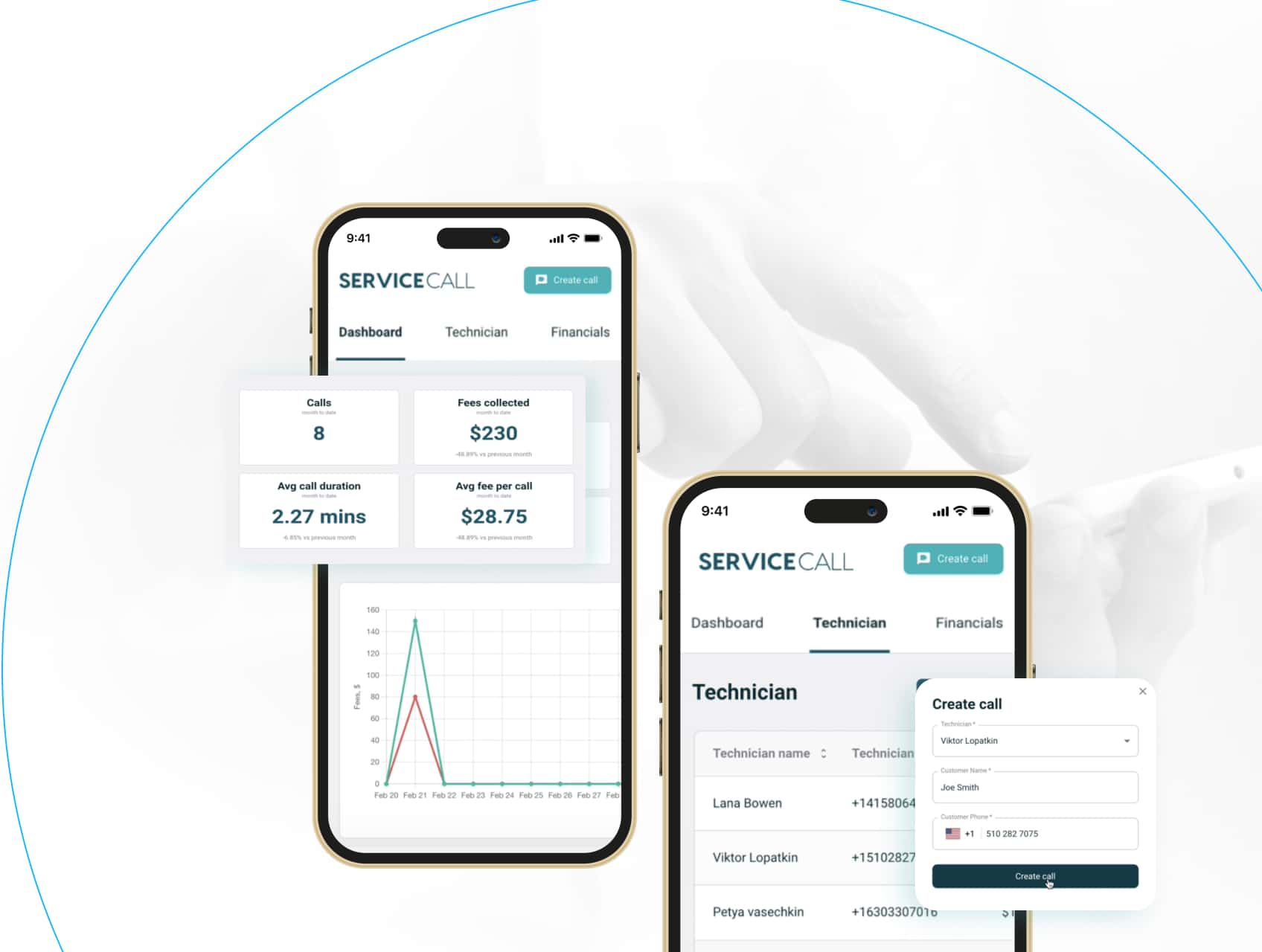
Handles routine outbound and inbound calls end to end, in natural conversation. Frees your team from repetitive dialing while extending coverage beyond business hours.
IVR Navigation
Works through phone menus, hold queues, and prompts on your behalf to reach the right department or extract the needed answer. Recovers hours lost to waiting on the line.
Lead Intake & Qualification
Captures inbound leads the moment they arrive, asks the qualifying questions, and routes each one to the right owner, cuting response time to minutes.
Prospect Scoring / Sales Outreach
Ranks prospects by fit and buying signals, then drafts or sends personalized outreach at scale. Your reps spend their time on accounts most likely to close.
Document and CV Evaluation
Reads applications, resumes, contracts, or submissions against your criteria and returns a structured assessment with reasoning. Shortens review cycles and applies the same standard to every document.
Proprietary Knowledge Retrieval
Makes your internal documentation, specialty knowledge, policies, and historical records answerable in plain language.
Trend Identification, Analysis
Monitors markets, competitors, or operational data continuously and surfaces meaningful shifts with supporting evidence. You see changes while there's still time to act.
Interactive Q&A for Course Promotion
Answers prospective students' questions about curriculum, pricing, prerequisites, and outcomes in real time. Converts curiosity into enrollment without adding admissions headcount.
Data Enrichment for R&D
Gathers and cross-references external sources to fill gaps in your research datasets.
Human Review for Risky Actions
Pauses the agent before consequential steps and routes them to a person for approval, with full context attached. You get automation speed while keeping accountability where it belongs.
Customer Support / Patient Engagement
Resolves common inquiries, sends reminders, and follows up proactively across chat, email, and phone. Improves responsiveness and satisfaction while lowering cost per interaction.
Patient Intake
Collects demographics, history, consent, and insurance details before the visit and writes them straight into your EHR. Shorter waiting-room time and cleaner charts for the clinician.
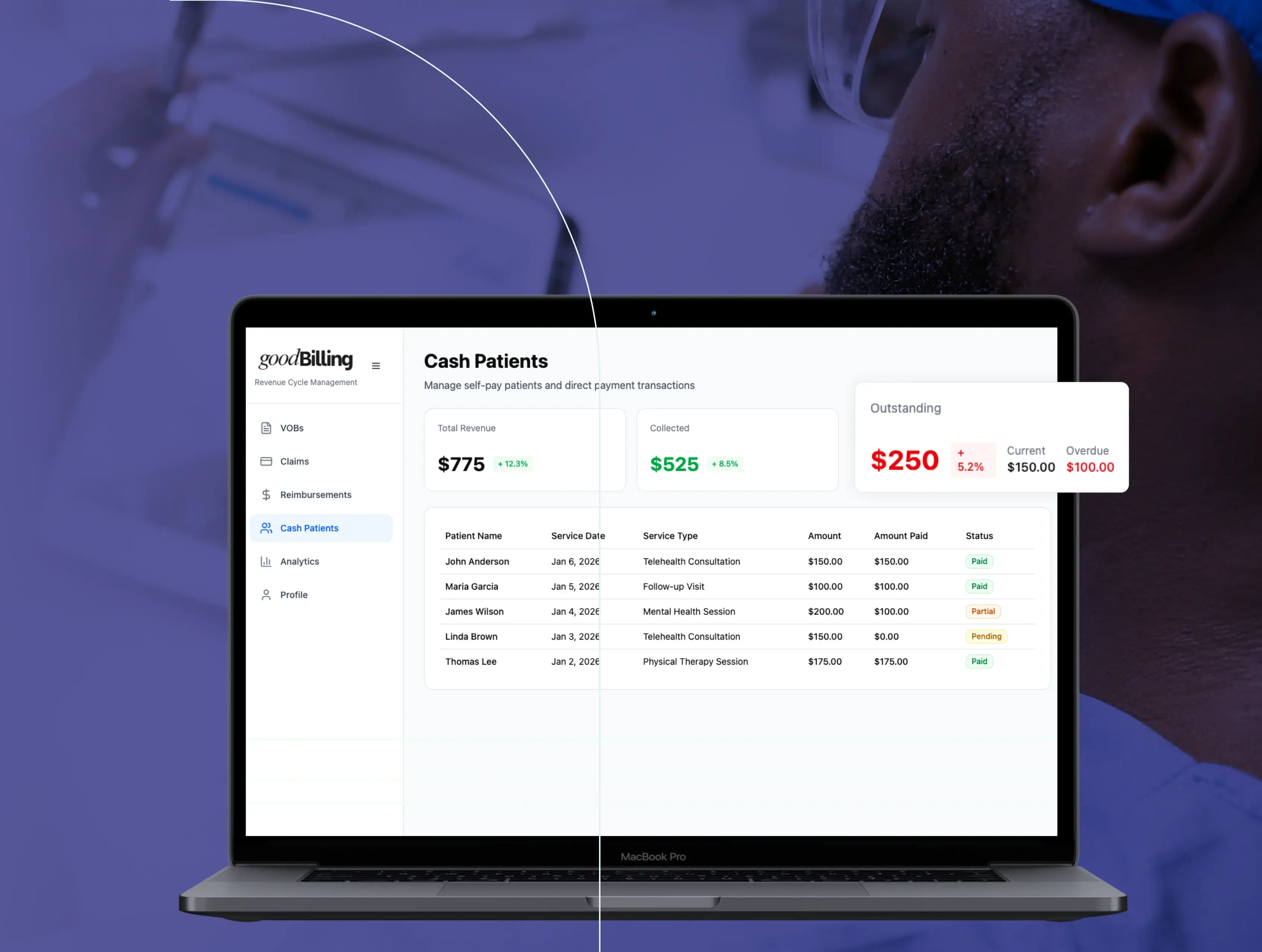
Verification of Insurance Benefits
Confirms active coverage and benefit details with the payer automatically. Prevents surprise denials and gives patients accurate cost expectations upfront.
Eligibility Checks
Validates patient eligibility for a given service or program in real time. Staff stop discovering coverage problems after the service has been delivered.
Prior Authorization
Assembles the clinical justification, submits the request, and tracks it through to a decision. Reduces treatment delays and the administrative burden that comes with them.
Claim Automation
Prepares, scrubs, and submits claims while flagging errors likely to trigger a denial. Faster reimbursement with a lower rework rate.
Payer Communication
Manages the calls, portals, and follow-ups needed to chase status updates, appeals, and disputes. Recovers revenue that would otherwise be abandoned because nobody had time to pursue it.
Clinical Knowledge Navigation
Surfaces relevant guidelines, protocols, and evidence at the point of decision. Clinicians get answers in seconds rather than searching across references.
Healthcare Data Normalization
Maps records from disparate systems into consistent formats and code sets (ICD, CPT, HL7, FHIR, SNOMED.) Makes interoperability, reporting, and analytics workable across your organization.

Our Generative AI Consulting Services


Why do most Gen AI projects and agents deliver no ROI?
Generative AI needs to justify the investment, whether you’re a startup with an innovative idea, a product company seeking differentiation, or a traditional business attempting an AI transformation. Yet, only 5% of AI programs yield great results at scale, according to the MIT research.
No coherent strategy behind AI
Many teams struggle to understand the real capabilities of LLMs. Some leaders get sucked into hype cycles, while others systematically overlook real possibilities. As a result, engineers launch scattershot pilots instead of targeting acute and recurring pains that cost money for the business.
Data foundations being weak or absent
Proprietary data needed for results beyond a simple pilot is often scattered across systems and has no real owner. Critical context about workflows gets lost in email, Slack, WhatsApp, and calls that nobody bothered to record. That's why MindK first gets data and processes in order, so that you don't scale chaos with AI.
Hallucinations that undermine trust
When faulty output creeps into production, employees lose trust in AI systems. The risk is even greater for autonomous agents. To generate reliable output, production systems need grounded retrieval and clear validation. In higher-risk workflows, they also need fallback logic and human review.
Outdated systems AI cannot plug into
Internal, business-critical systems often have no APIs that agents can easily use. In many environments, people still re-enter data by hand. AI only becomes useful when it can retrieve the right data, trigger the right action, and fail safely when conditions are messy.
Security & compliance risks discovered post-factum
AI expands the attack surface, so questions about permissions, retention, auditability, and approval logic must shape the system architecture early. When those questions are deferred, teams end up rebuilding core flows under pressure.
No clear ROI framework for continued investment
Many companies see few gains from pilots because they simply have no mechanism to measure and improve AI performance in the long term. There is no shared definition of success, no baseline for cost or throughput, and no mechanism to connect model behavior to business impact.
Creating AI from scratch
Building AI from the ground up can get expensive fast. Beyond the model itself, teams need data pipelines, retrieval design, evaluation sets, security controls, observability, fallback logic, and integrations with existing systems. MindK helps startups quickly validate their AI ideas with a library of ready-made agents and AI building blocks that reduce initial investments.

Our Gen AI Consulting
Delivery Model
AI readiness assessment
Duration: 1–2 weeks
We start by assessing workflow fit, data quality, system constraints, security requirements, and internal ownership. The goal is to separate feasible use cases from ideas that still depend on missing data, rules, or unstable integrations.
What you get: risks and blockers, workflow + data dependency maps, security considerations, build-vs-buy guide.
Use case prioritization
Duration: 1 week
Ranking is based on business value, delivery effort, risk, data readiness, and integration complexity. Our consultants explain whether AI is actually the right tool, or whether a conventional workflow, rules engine, or search layer would solve the problem more cleanly.
What you get: use-case shortlist with a value-versus-effort view, initial roadmap.
Architecture design
Duration: 1–2 weeks
We design the model and provider strategy, retrieval, orchestration logic, integration points, access controls, and trace instrumentation. You also get clear evaluation criteria your system has to meet before rollout.
What you get: model, retrieval, and orchestration approach, acceptance criteria, validation build scope.
Validation build
Duration: 1–4 weeks
MindK validates the idea using a focused version built on real or representative data. The point is to test failure modes early, measure performance against the evaluation set, and decide whether the use case is ready for production investment.
What you get: evaluation against agreed criteria, findings on failure modes and design gaps.
Production build, integration, hardening
Duration: 4–10 weeks
We turn the validated design into a production system. You get observability, fallback logic, security controls, deployment pipelines, and version control for prompts, models, and retrieval logic. We also cover rollout planning, rollback paths, quotas, and the operational constraints that prototypes usually ignore.
What you get: production-ready integrations, security, observability, rollout and rollback plan, handoff materials.
Launch, monitoring, continuous improvement
Duration: ongoing
Launch in controlled conditions, monitor quality, latency, failure patterns, and cost, then improve the system based on production traces and human feedback. As usage grows, we extend the operating model to cover model updates, evaluation drift, new workflows, and tighter governance.
What you get: monitoring, production findings, performance & cost baselines, ongoing optimization.
Prepare your business for AI transformation
Legacy system modernization
Post-vibecode cleanup and hardening
Data preparation and pipeline design
Integration and interoperability

Responsible AI by design
MindK's governance controls exactly how data is handled, how decisions are constrained,
how quality is tested, and how failures are detected once your system is live.
Secure architecture
AI governance and control points
Reliability and evaluation
LLM monitoring and cost visibility
What
our
clients
say
-

Allison Erickson
Director of Product, The Lactation Network
USA Such quality work in such efficient timing
«I have nothing but great things to say about our partnership with MindK and the solid work they have done and continue to do for the growth of our company. Our rapport is strong which is a reflection of their professionalism, hard work, and great outputs.»
-

Ida Groth
Senior Product Manager, Building Materials Company
Norway Responsibility
and proactiveness«It’s so comforting to know that they see the whole picture and take full responsibility. It’s made all of the difference. I was most impressed with their proactiveness.»
-

Per Otto Larsen
Head of CSR Services, CEMAsys.com
Norway High level of detail
and thoughtfulness«The level of detail and thoughtfulness of what they deliver is so good, that a simple explanation of the next idea serves as the basis for them to take it and turn into reality. MindK’s support allows us to focus on core business, product growth and our customers’ needs.»
-
Al Hariri
Co-Founder, Vitagene
USA Results-oriented and
outcome-driven«I can tell you confidently that they are different from your regular agency that just wants to charge as much money for their work as they can get away with. MindK is completely results-oriented and outcome-driven.»





Why Companies Choose
Our Generative AI Consultants
Outcome-first mindset
Every AI we build is designed to solve recurring operational problems and alleviate business pains in production.
Full-stack AI expertise
The work spans strategy, data engineering, workflow automation, cloud-native delivery, APIs, MLOps, and compliance.
Speed without recklessness
Delivery discipline is the priority with expertly crafted architecture, human review, deployment, and support with clear success metrics.
Responsible AI by design
Security, access control, auditability, evaluation discipline, and human oversight are baked into every model and LLM implementation.
Our approach

Request a Generative AI Readiness Assessment
Let us know about your technology challenges and we'll
help you resolve them.
FAQ
-
How do we know if we are ready for generative AI?
Start with the workflow, the business pain, the data reality, the integration surface, the owner, and the success metric. If even two of those are vague, the team is usually not ready to build yet. If those are vague, the right first step is assessment and prioritization, not implementation.
-
How long does it take to go from an idea to a production-ready system?
That depends on the scope and operating conditions. A narrow implementation can move quickly. A regulated, integration-heavy system takes longer because the hard work sits in workflow design, data quality, testing, and controls.
-
Do we need proprietary data to make generative AI useful?
Public models can provide language capability. The business value usually comes from internal data and workflow context. In many cases, the difference comes down to retrieval quality, workflow design, and how well the system fits into the rest of the stack.
-
Can AI be integrated into existing software, or do we need to rebuild?
In many cases, AI can be integrated through APIs, middleware, and event-driven connections rather than a full rebuild. The right answer depends on how brittle the current systems are and where the real bottlenecks sit.
-
How do you reduce hallucinations in production systems?
Our generative AI consultancy makes the output trustworthy via grounded retrieval, better context assembly, structured outputs, evaluation, fallback paths, permission-aware tool use, and human review, where mistakes carry real cost.
-
How do you keep proprietary data secure when using LLMs?
At MindK, security starts at the architecture level. We design permissions, encryption, redaction, logging, and access boundaries around the actual exposure risks of the workflow. Auditability is part of that design itself.
-
How much does generative AI consulting cost?
Cost depends on scope. A focused readiness engagement is very different from a production build with multiple integrations, governance requirements, and ongoing optimization. The practical way to estimate cost is to scope the workflow first, then map the dependencies, the integration surface, and the quality bar.
-
How does your Gen AI consulting company measure ROI?ve AI project?
Start with a baseline. Then measure the operational shift the system is supposed to create. That could mean shorter cycle times, fewer manual touches, faster resolution, lower error rates, better conversion, or higher throughput. Tie the technical evaluation to a business KPI early.
-
Can you work with our current stack and cloud environment?
Usually yes. In most cases, the goal of our LLM consulting services is to work with current systems where possible and modernize where the blockers are real.
DOWNLOAD THE COPY
Fill in the form to get your copy. It's 100% free
