




HIPAA Compliance
Consulting Services
Pass every security review with confidence, whether they gate hospital deployment or an enterprise deal. Our HIPAA compliance consultants review the flow of PHI in your systems, assess the shadow use of AI, deploy missing controls as infrastructure code in your cloud, and hand over the evidence pack for auditors.
Trusted by







Challenges we fix as a HIPAA compliance consulting company
Our first job is to find every system PHI reached beyond the database it was meant to live in, counting logs, backups, analytics, and support tools. The length of that list sets the challenge. We know what each item on it costs because we built the same list for our own healthcare platforms running under HIPAA in production.
Handling PHI in a live product that wasn't built for HIPAA
Remediation runs against the architecture you already have. Storage, query access, logging, and provisioning come under control in sprints ordered by exposure, and the product keeps serving users throughout.
Winning a big deal gated by a security review
Audit logs tied to named users, encryption specifics, BAA coverage, written incident response. Health systems have tightened these questionnaires since the Change Healthcare breach, and buyers now verify vendor answers against evidence. That evidence set gets built alongside the controls it describes, so your answers point at production.
Making sure PHI is not shared with AI models you don't control
Model inputs need to be de-identified or tokenized wherever the feature still works without the identifiers. Where it doesn't, inference stays inside a boundary a BAA covers. Retention then gets decided per feature and written down: prompt logs, completions, provider-side storage, and the vector index, since embeddings of clinical text carry the same exposure as the text they came from.
Understanding your business associate exposure
Where do the identifiers actually sit? We answer that across production tables, logs, backups, and analytics, then draw the boundary of what makes you a business associate and name the BAA gaps inside it.
Logging moods is not the same as improving them
Tracing data flows end to end surfaces the integrations that never made the vendor list: a log aggregator holding request payloads, a support tool where staff pastes patient messages, an analytics tag firing on an authenticated page. Each path closes with BAA coverage or with PHI routed out of it, subprocessors included.
Shipping fast when every PHI feature triggers review
Once the controls live in infrastructure and the checks run in CI, a new PHI feature inherits its compliance posture from the pipeline. Sign-off becomes an automated gate, and release stops waiting for a manual round every sprint.

HIPAA compliance consulting for covered entities and business associates
Business associates
- Healthcare software and SaaS vendors: HIPAA-ready architecture, code review focused on PHI handling paths, and BAA coverage traced across your own subprocessors.
- EHR and EMR companies: PHI data-flow mapping across modules and interfaces, encryption, access controls, and audit logging built to survive a customer's audit.
- IT service providers and MSPs: assessment of your business-associate obligations, PHI handling procedures for your engineers, and vendor risk review across the tooling you deploy for clients.
- Billing companies and clearinghouses: transaction and transmission security, storage compliance for retained claim data, and breach detection with response procedures in place.
- Digital health startups: a HIPAA program stood up before your first enterprise deal, so the security questionnaire doesn't stall a signature.
Covered entities
- Hospitals and health systems: technical safeguard assessment across the systems that touch PHI, remediation of the gaps found, and documentation packaged for OCR-facing review.
- Physician practices and specialty clinics: compliance scoped to the systems you actually run, without the overhead of an enterprise program.
- Telehealth and digital health platforms: secure communication channels, remote access controls, and BAA coverage across the vendors in your call path.
- Health plans and insurers: Privacy Rule controls over member data and oversight of the business associates handling it on your behalf.

Our HIPAA compliance consulting services
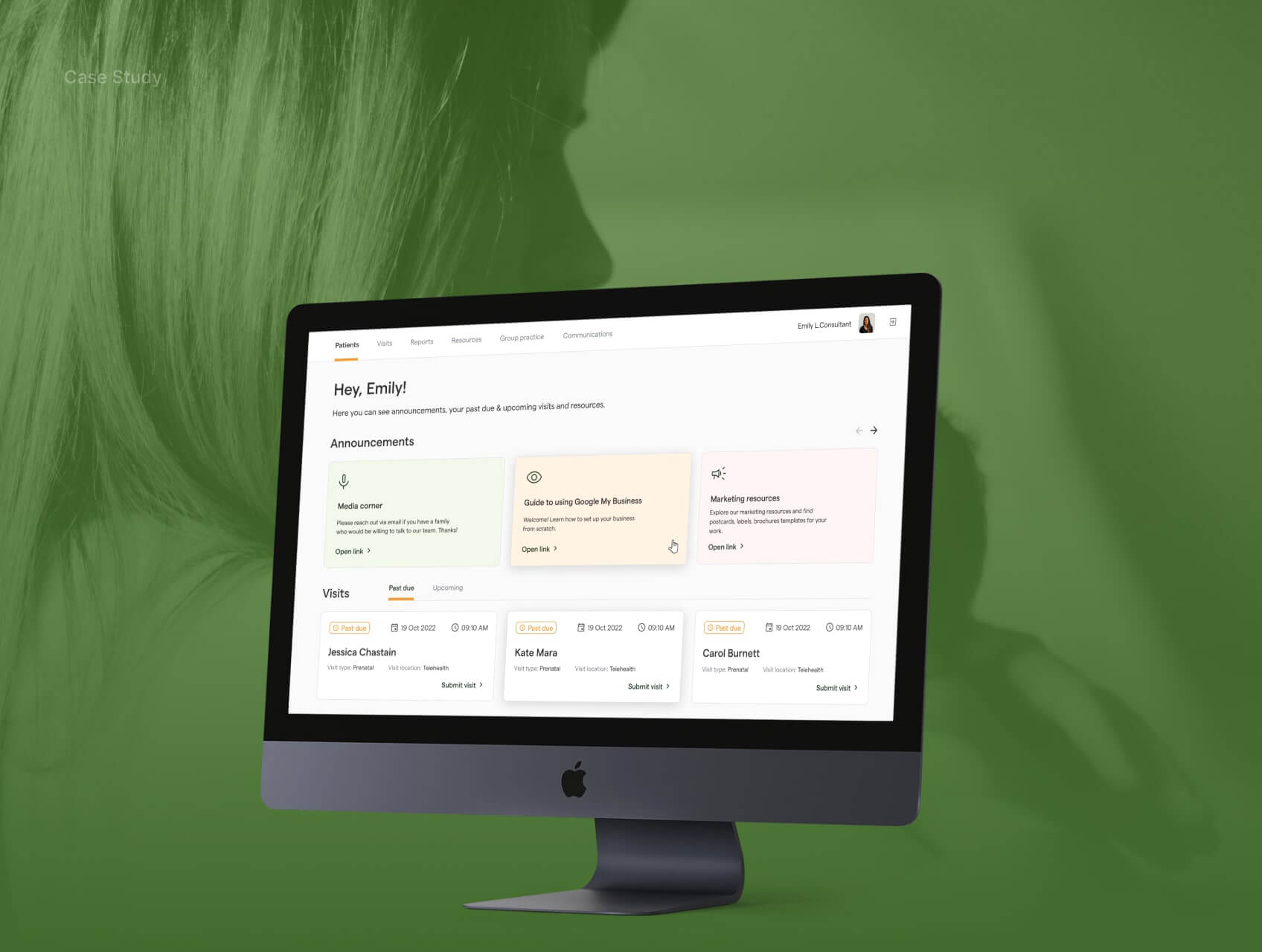
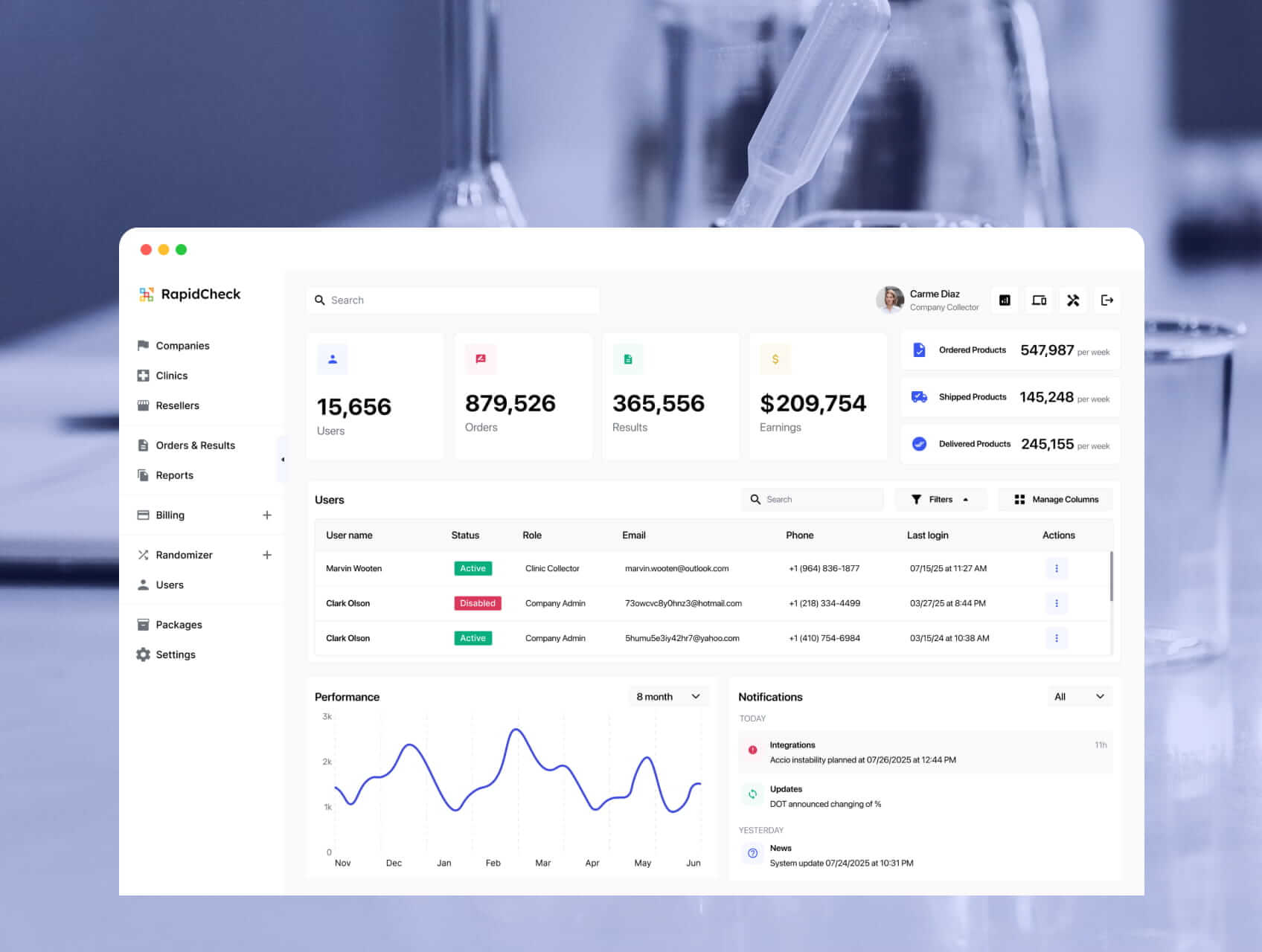
Your private, HIPAA-compliant AI foundation
HIPAA consulting company addresses your shadow AI usage and scopes each AI feature, so that PHI stays inside your perimeter, backed by solid evidence.
Inference inside a BAA boundary
Where a feature genuinely needs IDs, the model runs behind a private zero-retention endpoint under BAA (or inside your own cloud account). Either path is model-agnostic.
Retention rules for every prompt, output & embedding
Embeddings of clinical text carry the same exposure as the text itself. The retrieval index sits inside the PHI perimeter with the same access controls and audit logging.
Automated PHI de-identification
Our anonymization service strips sensitive data from LLM inputs field by field, then reverses the tokens inside your perimeter when a clinician needs the real name back.
Clinical output reviewed by a human
Where a model output can influence care, we add a clinician sign-off. The review is recorded as an event you can produce later. Patient-facing features also get a disclosure copy and a consent path, which several states now require by statute.
Cost controls and visibility into shadow AI
Overcome unsanctioned AI use with the approved routes that are more convenient to use. We build usage dashboards and budget alerts for those sanctioned models, while egress monitoring and unexplained provider charges help with tracking shadow AI spend.

Our HIPAA compliance consulting process
Compliance discovery and risk analysis
Architecture and infrastructure hardening
Controls get encoded in infrastructure, and the secure cloud environment gets stood up. MindK builds it, and your engineers review every decision before it merges.
Iterative remediation and build
Controls land in sprints with validation at each gate. Our engineers own quality inside the sprint; you approve the scope going into it.
Testing, evidence, and audit preparation
Security testing, immutable audit trails, and documentation that an auditor can work through. MindK assembles the evidence, and you hold it, since the audit relationship stays yours.
Monitoring and ongoing compliance
Continuous monitoring and periodic re-checks continue after launch. MindK supports the cadence you choose.

HIPAA rules your organization must comply with
HIPAA Security Rule technical safeguards
Privacy Rule and minimum-necessary access
Disclosure and human review rules for AI features
Health data that falls outside HIPAA
Breach Notification Rule readiness
Where SOC 2, GDPR, and HITRUST overlap
What
our
clients
say
-

Allison Erickson
Director of Product, The Lactation Network
USA Such quality work in such efficient timing
«I have nothing but great things to say about our partnership with MindK and the solid work they have done and continue to do for the growth of our company. Our rapport is strong which is a reflection of their professionalism, hard work, and great outputs.»
-

Desmond Lo
Managing Partner, BIG Healthcare
Canada The best outsourced software development team i have ever worked with
«MindK was very flexible and capable of dealing with changes while always respecting our budget and time constraints. Their commitment to quality matched our own, resulting in zero disagreements or conflicts.»
-
Al Hariri
Co-Founder, Vitagene
USA Results-oriented and
outcome-driven«I can tell you confidently that they are different from your regular agency that just wants to charge as much money for their work as they can get away with. MindK is completely results-oriented and outcome-driven.»
-

Jason Lutton
CEO, International Surrogacy Center
Impressed with their ability to understand our industry
«MindK reduced the time a surrogate takes to complete an online application, increased the number of completed applications, and streamlined our intake process, resulting in fewer staff man hours needed to complete the backend processes for finalizing an applicant.»





Why healthcare organizations choose MindK for HIPAA consulting
A team that runs its own PHI systems
Controls we recommend are the ones we maintain ourselves on a platform processing 68K+ claims a month on a HIPAA-compliant infrastructure.
170+ clients since 2009
Nine in ten of our engineers are now working on healthcare projects with strict privacy requirements.
Auditable and reproducible controls
Pre-built components may cut time-to-value but you still own the code, data, and architecture. No SaaS license, no lock-in.
One team to find and fix your HIPAA gaps
The assessment and the remediation come from the same engineers, so no finding gets lost in translation.
Our Healthcare Knowledge Base


Ready to Achieve Audit-Ready HIPAA Compliance?
Share your challenges. We will reply within 24 hours to set up a free strategy session with our HIPAA comliance consultants.
FAQ
- Do you issue an official HIPAA certification?
No body certifies HIPAA compliance, and any vendor offering a certificate is selling something HIPAA doesn’t recognize. What we deliver is readiness: working controls, documented evidence, and support through your audit or a buyer’s security review.
- Can you bring a product that's already live into compliance?
Yes. Remediating shipped MVPs and legacy systems is core work for us, and we sequence it so the product keeps running while the riskiest data paths close first.
- We already use Vanta or Drata. What does this add?
Keep it. Those platforms watch cloud configuration, devices, onboarding, and policy attestation, and they collect evidence well. We’ll get your dashboard to green.
What a dashboard can’t see is your own application. It confirms your database is encrypted; it won’t tell you your API writes patient names into a log that ships to a third-party tool. And a red row reports that a control is missing, which still leaves someone to encrypt a live database or move data off a vendor that won’t sign a BAA. That half is ours.
Keep it. Those platforms watch cloud configuration, devices, onboarding, and policy attestation, and they collect evidence well. We’ll get your dashboard to green.
What a dashboard can’t see is your own application. It confirms your database is encrypted; it won’t tell you your API writes patient names into a log that ships to a third-party tool. And a red row reports that a control is missing, which still leaves someone to encrypt a live database or move data off a vendor that won’t sign a BAA. That half is ours.
- Do we keep ownership of the code and infrastructure?
Yes. The code, the data, and the architecture stay yours, including the infrastructure definitions the controls are written in.
- How long does HIPAA remediation take?
It depends on how PHI moves through your current architecture and how much of the system falls in scope. Discovery produces the timeline, and we’d rather give you that number after seeing the data flows than before.
- Do you handle BAAs with our cloud and vendors?
We review your agreements and track coverage across every integration that touches PHI, flagging the vendors and subprocessors that lack one. Signing the instrument stays with your counsel, since a BAA is a legal contract.
- Can you work alongside our internal engineers?
Yes. Engagements are set at the founder or C-level and delivered with your team, whether that’s a product engineering group or the IT staff running systems inside a provider organization.