Header Images

Medical scheduling
software development
services

We build patient and provider scheduling systems for healthcare teams that need more than a generic booking calendar. Get to market up to 70% faster with ready-to-use voice and chat agents from our medical scheduling software development company. Get a system designed around real clinical rules, live EHR integration, eligibility checks at booking, and HIPAA-compliant infrastructure.

Trusted by

Where off-the-shelf scheduling breaks down in healthcare

Most scheduling tools can handle a standard appointment request. Healthcare scheduling has to handle a heavier operational load: specialty-specific appointment logic, multiple resources, EHR write-back, eligibility checks, and staff workflows that vary by site.

Generic SaaS calendars do not understand clinical rules

A specialty visit may require a provider, an exam room, equipment, and a trained technician. If the scheduling system cannot model those dependencies, the logic falls back to staff memory, spreadsheets, and workarounds, which creates risk every time the team grows, a coordinator leaves, or a new location opens.

EHR-native scheduling is rigid and hard to extend

Many providers still use the scheduling interface that shipped with their EHR years ago, where custom appointment types, intake screening, dynamic visit durations, and waitlist promotion may be unsupported, expensive to configure, or locked behind vendor consulting. The booking flow then follows the limits of the system rather than the way the specialty operates.

Self-scheduling without live EHR sync

A patient-facing portal that reads availability from a cached snapshot can show slots that were already booked by phone, forcing staff to reconcile the booking system with the chart. Real self-scheduling needs live availability and confirmed write-back, so the slot the patient sees is the slot that lands in the EHR.

Missed eligibility at booking turns into denials weeks later

Coverage checked after the visit is checked too late. Eligibility at booking gives staff a chance to catch inactive plans, deductible issues, and prior authorization signals before the appointment is confirmed, moving important revenue-cycle checks closer to the decision point.

Multi-site, group-practice, and network scheduling not supported

Most scheduling tools assume one practice, one location, and one set of rules. MSOs, group practices, and provider networks need shared availability across locations, with site-level overrides for services, hours, equipment, and clinician preferences, so central teams can route patients through one operating layer instead of coordinating across separate calendars.

Build vs buy is no longer a dilemma

Custom scheduling software development used to be prohibitively expensive (especially after you account for the maintenance costs). Most specialty clinics and multi-site networks were happy to find an off-the-shelf solution fitting 70% of their requirements (which are also quite expensive). MindK flips this math.

Medical scheduling software development

Appointment rules, EHR sync, eligibility checks, reminders, voice routing, and admin tools are all treated as a custom engineering problem.


The minimum cost is $150,000+ or more. The result can be tailored, but product teams wait longer to test real booking flows.


Every change to site rules, payer logic, patient communication, or provider preferences becomes another development ticket and another expense.


01

AI-based scheduling development

Build 3-4x faster with ready-made components and AI agents for booking, rescheduling, reminders, patient onboarding, eligibility checks, verification of benefits, voice workflows, and chat automation.


Senior engineers control the output and shape software around your clinical rules, EHR environment, compliance model, and patient access goals.


Humans own architecture, security, code review, and quality gates.

02

Save 50–80% of manual efforts across scheduling and RCM operations.

Our medical scheduling software development services

MindK builds scheduling end-to-end: full custom platforms, modules layered on existing EHRs, and AI agents that handle the booking conversation. We assemble these layers around the project’s workflow, integration needs, and compliance requirements.

Specialty-specific scheduling on top of an existing EHR

We build a scheduling layer that reflects how the specialty runs: custom durations, multi-resource booking, intake logic, and confirmed appointment write-back to the existing chart.

Custom appointment types and durations
Multi-resource booking
Intake screening at booking
Waitlist and slot promotion
EHR write-back
Per-specialty rules
Learn more

Patient self-scheduling portals and booking widgets

Patients book against live EHR availability, so confirmed slots are real. Identity verification happens before any PHI is shown. The booking surface can be an embeddable widget, a standalone branded portal, or both.

Embeddable booking widget
Live slot availability from EHR
Patient identity verification
Online rescheduling and cancellation
Learn more

Voice and chat AI scheduling agents

Most patients still call. Voice agents answer the booking line, negotiate a slot in natural language, and confirm the appointment into the EHR without queueing or staff involvement. The same capability can run as a website chatbot.

Inbound call booking
IVR routing for returning patients
Website chatbot scheduling
Natural language slot negotiation
Live agent handoff
Learn more

Multi-location, multi-provider resource orchestration

MSOs and networks need one scheduling system across all sites. We build a shared availability layer with per-site overrides for hours, services, and resource constraints. Patients can book across locations while each site retains its own rules.

Cross-site provider availability
Per-location hours and rules
Network-wide referral routing
Centralized scheduling with local autonomy
Utilization reporting by site
Learn more

Scheduling-to-EHR integration layer

For teams keeping their existing booking tool but losing time to manual reconciliation, we build the connector to the EHR and the software they use daily. That can mean FHIR R4, HL7v2, proprietary APIs, SOAP/XML, or a hybrid integration pattern.

FHIR R4 and HL7v2 connectors
Real-time bidirectional sync
Legacy SOAP/XML adapters
Conflict and duplicate detection
Utilization and no-show analytics
Learn more

Eligibility and verification of benefits at booking

Coverage is verified before the appointment is confirmed. Eligibility, deductible, benefits, and prior authorization signals land on the scheduling record so front-desk teams can act before the visit.

Real-time eligibility at booking
Deductible and VoB
Prior auth requirement flagging
Slot hold on failed eligibility
Learn more

Healthcare scheduling software systems built for every care setting

A single-provider clinic, a 50-site network, and a SaaS company embedding scheduling into a broader product need different models for availability, tenancy, permissions, and EHR write-back.

Specialty clinics

Single and multi-provider clinics need appointment types, intake screening, and resource rules that match the specialty. Behavioral health, women’s health, lactation care, and orthopedics each have different constraints around duration, provider matching, rooms, equipment, and follow-up care.

Multi-site networks

Route patients across locations, services, and providers without making staff compare separate calendars. A shared availability layer helps patients find the right access point faster, reduces referral leakage, and gives leadership a clearer view of demand, utilization, and capacity across the network.

MSOs

Get a scheduling infrastructure that doesn't force clinics into one rigid operating model. This requires centralized visibility, reporting, and referral coordination with local rules for hours, services, staffing, resources, payer mix, and clinician preferences.

Hospitals and health systems

Hospitals and health systems often need department-level resource orchestration, referral workflows, OR or imaging block scheduling, and EHR write-back at scale. The scheduling layer has to fit inside environments such as Epic, Oracle Health, or Meditech without creating another disconnected source of truth.

Telehealth and virtual-first providers

Virtual care teams need booking flows that support asynchronous and live visits, video session links at confirmation, and timezone-aware availability for providers and patients across U.S. states.

HealthTech companies

SaaS founders embedding scheduling into a larger healthcare product need a reusable module that can grow with the platform. We can deliver the scheduling layer as an embeddable widget, a white-label portal, or a full platform.

White-label scheduling solutions

Resellers, provider networks, and SaaS vendors can use a brandable scheduling platform when they want to offer scheduling without building the entire product from scratch.

How we helped healthcare companies build better products

A look at how custom medical scheduling software performs in real clinical and operational settings.

  • Background for

    The Lactation Network, USA

    Specialty EMR with a built-in calendar serving 29,000+ visits per month

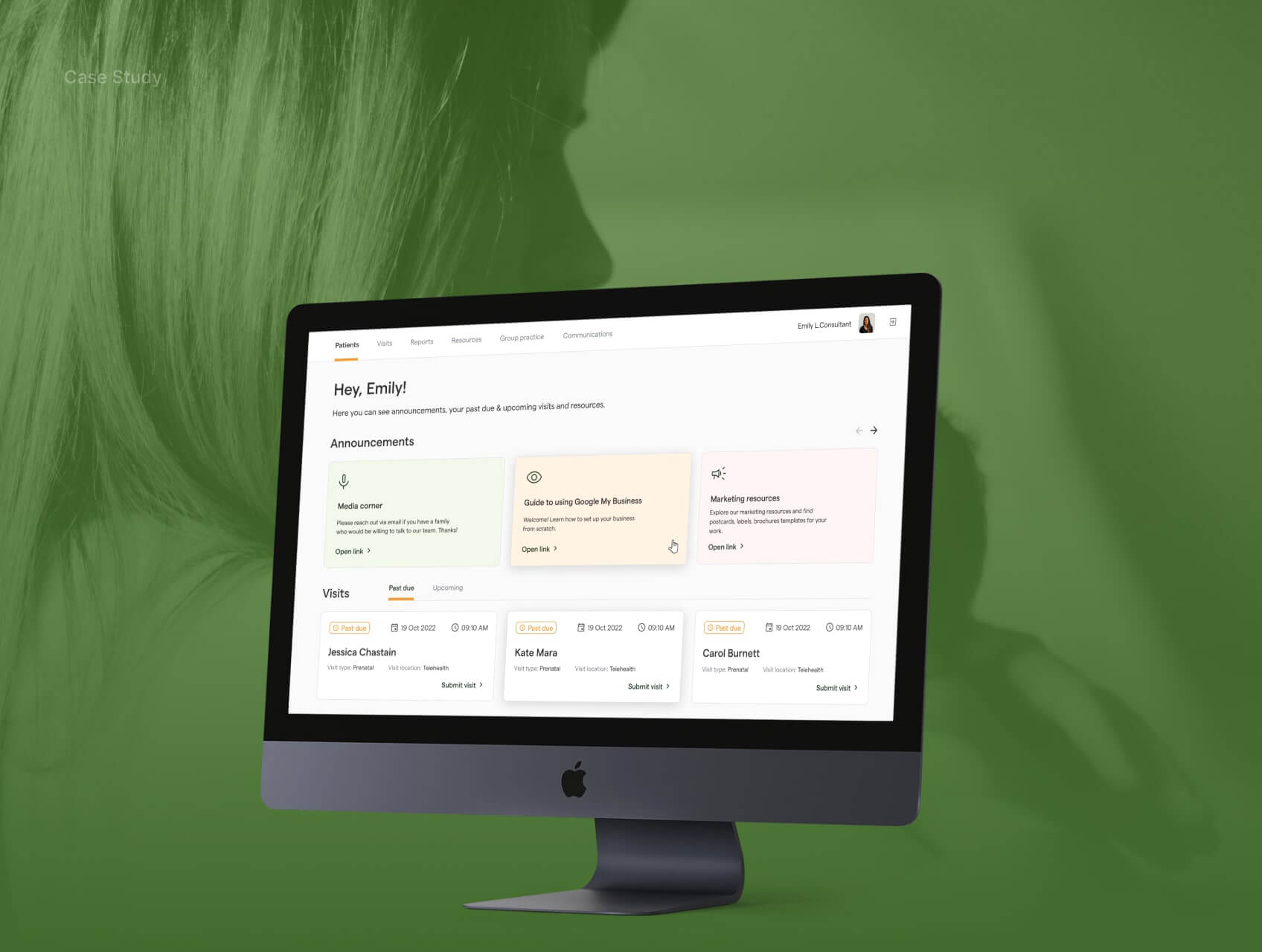
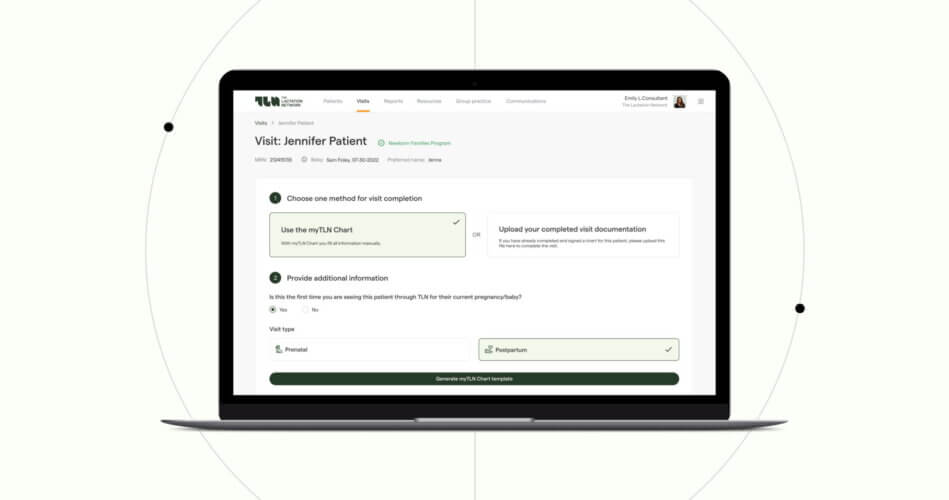
    The Lactation Network connects breastfeeding mothers with certified consultants across the United States. MindK built the EMR from scratch, including a booking calendar with specialty-specific patient-consultant matching, real-time availability, and appointment confirmation without staff intervention.

    • 29,000+ patient visits scheduled per month.
    • 4,500+ medical specialists in the network.
    • Zero outages affecting the service.
    • HIPAA-compliant telehealth integrated alongside scheduling.
  • Background for

    Multi-tenant occupational health platform, USA

    Automated bulk scheduling for 26,000 clinics

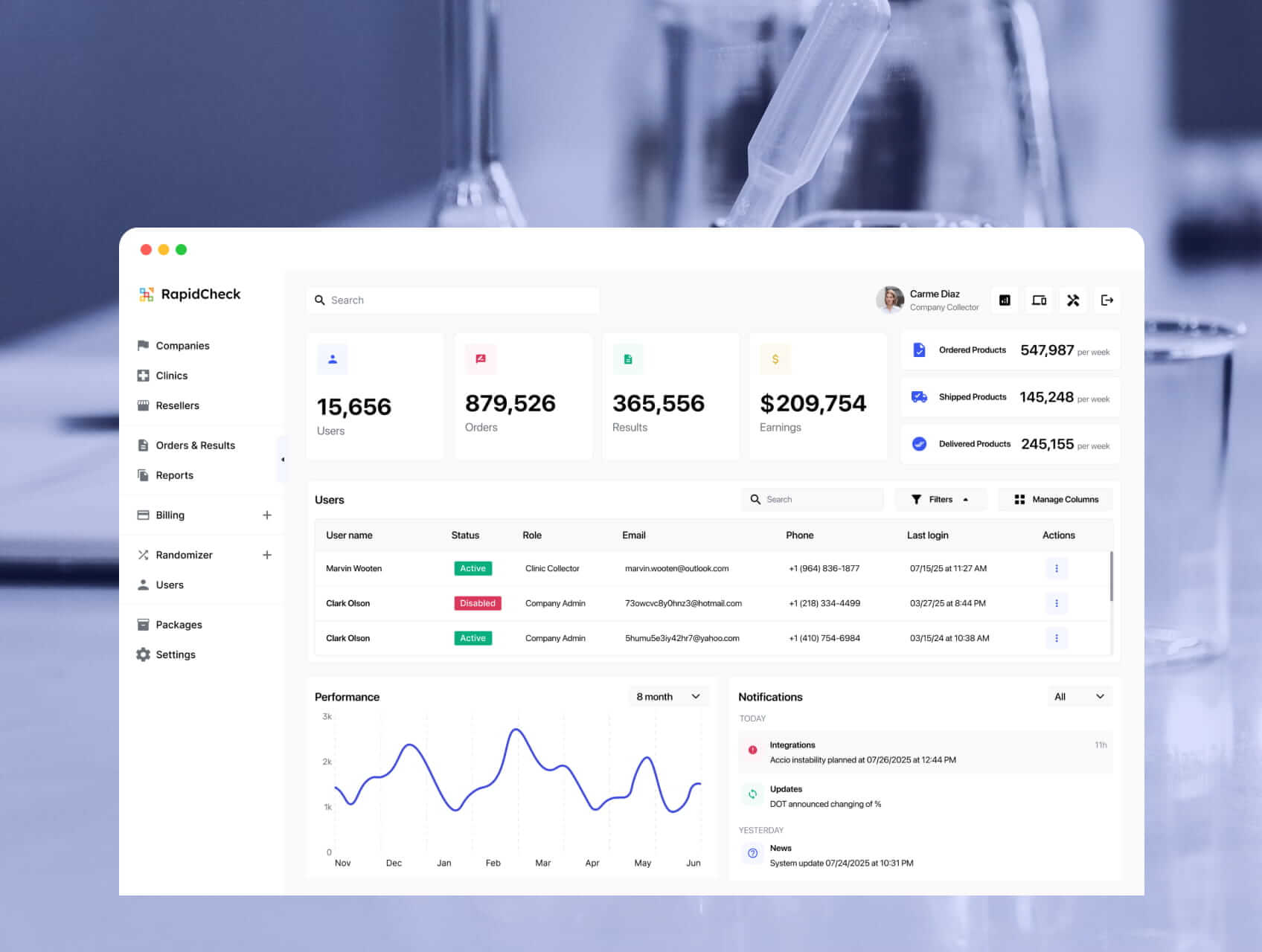
    An occupational health platform needed automated scheduling for large employers, clinics, labs, and MROs. MindK built a high-volume scheduling module that lets a manager submit a single requisition, then randomizes workers into batches, selects the nearest accredited clinic or lab, and schedules the required checks automatically.

    • Bulk randomization and auto-assignment algorithm.
    • Three-way integrations with leading labs and MROs.
    • 26,000 clinics in the network.
    • SOC 2 Type II certified.
    • 1
    • 2
    Deliver your software up to 50% faster with ready-to-use agents and AI building blocks

    Deliver your software up to 50% faster with
    ready-to-use agents and AI building blocks

    Patient intake

    Collects patient information and runs intake screening before or during booking, so staff aren't re-entering data at the visit.

    Eligibility verification

    Checks insurance coverage in real time at the point of booking, flagging inactive plans before the appointment is confirmed.

    Verification of benefits

    Checks deductible status, benefits, and prior authorization requirements so front-desk teams know what's covered before the visit.

    Voice call and IVR automation

    Answers the booking line, negotiates appointment slots in natural language, and routes returning patients without queueing.

    Chat automation

    Handles scheduling conversations through a website chatbot, from slot negotiation to confirmation.

    Fax, SMS, and email automation

    Sends appointment confirmations, reminders, and reschedule notices across whichever channel the patient or referral source uses.

    Healthcare data normalization

    Maps and standardizes data between the scheduling system and connected EHRs, labs, or clearinghouses so records stay consistent across systems.

    Seamless EHR, clearinghouse & payer portal integrations

    Get a scheduling system that already accounts for healthcare constraints. MindK's uses battle-tested technologies that support live EHR integration, eligibility checks, patient communication, security controls, and AI-assisted workflows.
    • Epic Epic
    • Oracle Health Oracle Health
    • athenahealth athenahealth
    • eClinicalWorks eClinicalWorks
    • Meditech Meditech
    • NextGen NextGen
    • Quest Diagnostics Quest Diagnostics
    • Labcorp Labcorp
    • CRL CRL
    • Salesforce Salesforce

    Compliance built into the architecture

    HI protection, access control, audit logging, and operational monitoring are part of the architecture before product code is written. HIPAA and SOC 2 requirements shape the infrastructure, delivery process, and evidence trail from the first sprint.

    Data encryption and PHI protection

    Electronic PHI is encrypted at rest and in transit using AWS KMS-managed keys with automated rotation. HTTPS is enforced across the system.

    Access control and identity management

    Role-based access is enforced at the application and infrastructure level. MFA runs through AWS Cognito. Least-privilege access, no shared admin accounts, and no wildcard IAM policies are standard controls.

    Audit logging and incident response

    Every PHI access is logged, immutable, and tied to a user identity. CloudTrail logs are encrypted at rest. Automated anomaly alerts can run through Datadog or the monitoring stack your team already uses.

    Interoperability and API compliance

    FHIR R4 endpoints are planned from the start when they are part of the product roadmap. Patient Access APIs, Provider Directory APIs, and Bulk Data APIs can be included when scheduling needs to connect with a broader interoperability strategy.

    Secure infrastructure and availability

    AWS Well-Architected practices guide the baseline. Network segmentation, firewalls, automated encrypted backups, regional data residency, and consent management can be included based on the compliance model.

    Learn more about HIPAA compliance at MindK

    Contact us

    Our proven medical scheduling software development process

    A successful scheduling build starts with the booking workflow, the resource model, and the systems it has to connect to. We define those constraints first, then move into delivery with a clear scope, measurable outcomes, and a launch path your team can support.

    Discovery and scoping

    We map the booking flow, the resource model, the integration points, and the success metrics with your team in the room. The output is a buildable plan with scope, sequence, and cost for a custom patient scheduling software. If discovery surfaces that an off-the-shelf tool is the right answer for your situation, we will tell you so.
    01

    Infrastructure and environment setup

    Cloud infrastructure, CI/CD pipelines, monitoring, and security hardening go in first, before any product code is written. AI generates the boilerplate. Engineers validate every decision in healthcare scheduling software development,
    02

    Iterative delivery

    Two-week sprints, with working software at the end of each one. The first patient booking flow goes live in weeks, not quarters. AI accelerates code generation, test coverage, and documentation. Engineers own the architecture, code review, and quality gates.
    03

    Testing and launch

    AI-assisted UAT runs alongside human review of clinical edge cases. Self-healing E2E tests are pointed at a live EHR sandbox, so integration drift is caught before release. HIPAA and SOC 2 readiness checks are part of the launch checklist. The system does not ship until they pass.
    04

    Post-launch support and scaling

    Monitoring, refinement, and expansion to new specialties, locations, or AI agents as the business grows. We are set up for long-term ownership without large ongoing development costs. The same engineers who were involved in medical appointment scheduling software development stay on call.
    05

    Why pick MindK as your medical scheduling software development company

    Many development partners can build healthcare scheduling software. MindK brings production experience from healthcare products that have already handled real users, payer rules, and clinical workflows

    Low-risk launch

    You get a partner with experience running healthcare software in production. The patterns we recommend have been tested under real operational pressure.

    01

    Pre-built components, full ownership

    You start with production-tested booking, eligibility, voice, and chat components instead of building every piece from scratch. You own the code, data, and architecture outright.

    02

    AI speed with human expertise

    AI generates code, tests, and documentation under senior engineer review. Experienced humans own architecture, design decisions, code review, and quality gates.

    03

    Product mindset

    Discovery shapes scope before delivery begins. Real user feedback shapes the build. The focus is on getting working software into the hands of clinicians, patients, and operators quickly

    04

    What
    our
    clients
    say

    • Allison Erickson

      Allison Erickson

      Director of Product, The Lactation Network
      USA

      Allison Erickson

      Such quality work in such efficient timing

      «I have nothing but great things to say about our partnership with MindK and the solid work they have done and continue to do for the growth of our company. Our rapport is strong which is a reflection of their professionalism, hard work, and great outputs.»

    • Al Hariri

      Al Hariri

      Co-Founder, Vitagene
      USA

      Al Hariri

      Results-oriented and
      outcome-driven

      «I can tell you confidently that they are different from your regular agency that just wants to charge as much money for their work as they can get away with. MindK is completely results-oriented and outcome-driven.»

    • Jason Lutton

      Jason Lutton

      CEO, International Surrogacy Center

      Jason Lutton

      Impressed with their ability to understand our industry

      «MindK reduced the time a surrogate takes to complete an online application, increased the number of completed applications, and streamlined our intake process, resulting in fewer staff man hours needed to complete the backend processes for finalizing an applicant.»


      What we build alongside your scheduling system

      Scheduling connects to the EHR, patient portal, billing system, telehealth layer, and interoperability roadmap. These services are often built in the same engagement.

      Our Healthcare Knowledge Base

      Healthcare UX Design: 7 Best Remedies for the Industry's Unique Pains

      Healthcare UX Design: 7 Best Remedies for the Industry's Unique Pains

      Read more
      12-Step Guide to Patient Access APIs with Azure Health Data Services

      12-Step Guide to Patient Access APIs with Azure Health Data Services

      Read more
      How to Integrate RCM into a Healthcare Product: a Practical, Step-by-Step Guide

      How to Integrate RCM into a Healthcare Product: a Practical, Step-by-Step Guide

      Read more

        Let's build AI-powered medical scheduling software

        Share your ideas and challenges. We will reply within 24 hours to set up a free strategy session with developers who have shipped compliant healthcare products.

        FAQ

        • How long does custom medical scheduling software take to build?

          A working MVP of patient scheduling software development takes 6 to 10 weeks using our pre-built healthcare components. A full custom platform with multiple integrations, AI agents, and multi-tenant SaaS architecture typically lands in 4 to 6 months. Both timelines assume two-week sprints with shippable software at each one.

        • Will it integrate with our existing EHR or practice management system?

          Yes. We integrate via FHIR R4, HL7v2, or proprietary APIs with Epic, Oracle Health, athenahealth, eClinicalWorks, Meditech, and NextGen. For older systems with poorly documented APIs or SOAP/XML interfaces, we build adapters.

        • How do you handle HIPAA, SOC 2, and PHI security?

          Compliance is built into the infrastructure setup phase. Healthcare clients have shipped under HIPAA from day one and earned SOC 2 Type II certification post-launch. Origin is one example. The Lactation Network EMR has been HIPAA-compliant since 2022 and currently handles 29,000+ monthly patient interactions.

        • Should we build or extend our existing scheduling tool?

          It depends on whether the pain is workflow, integration, or both. If the booking experience works but the data is stranded, a connector to the EHR plus an analytics layer may solve it. If the workflow itself does not fit your specialty, the booking layer likely needs replacing. Discovery scopes both options and recommends the lower-TCO path.

        • Can you build AI-driven scheduling with voice agents and chatbots?

          Yes. MindK’s voice AI, IVR automation, and chat automation blocks are running in production on GoodBilling, handling payer calls and patient interactions at scale. The same components can plug into a patient-facing scheduling product for voice booking, chatbot scheduling, and IVR-based confirmation.

        • What is the typical engagement model?

          A fixed-scope discovery phase, then iterative delivery with a dedicated team. You own the code and IP from day one. MindK can also operate as a managed AI-enabled team augmenting your in-house engineers when that model fits better.

          Let's build medical scheduling software

          Share your project's details. We'll respond within 24 hours to set up a free, non-binding meeting with our consultants.

          Drop to attach file

          Thank you,
          your message has been sent successfully!

          We’ll contact you within the next 24 hours. In the interim, you can take a look at our portfolio or check us out on Facebook, LinkedIn, Twitter or Instagram.

          Ok