




Telemedicine software
development services
Build HIPAA-grade, EHR-integrated telehealth using agentic engineering and AI components already proven in production. The compliance, video, and integration groundwork is already built and kept current with the regulatory shifts hitting the industry in 2026, so your runway goes to the killer features.
Trusted by







Why most telehealth products stall before they scale
AI has raised the bar for telehealth products. Buyers now expect more than secure video, scheduling, and a patient portal. Software needs to prepare the visit, assist the clinician, keep patients moving between appointments, and turn the encounter into clean billing and follow-up data.
AI has changed what buyers expect from telehealth
A product that only handles video, chat, and scheduling now feels thin to clinics already testing AI in daily workflows. The market is captured by software that removes work around the visit: intake, eligibility checks, visit prep, documentation, follow-up, patient messages, billing support, and handoff to the EHR. This is the layer we target as a telemedicine software development company.
Adoption stalls when the product adds charting work
If every virtual visit creates another note, another summary, another code check, and another EHR task, providers treat the platform as extra work. AI documentation turns the visit conversation into a structured draft note, summary, coding support, and EHR-ready record for the clinician to review and sign.
Revenue leaks when coverage, benefits, and billing sit outside the visit
Many telehealth products treat the visit as the product and the revenue workflow as someone else’s problem. Staff still have to verify coverage, interpret benefits, collect patient responsibility, prepare billing data, and clean up preventable claim issues after the encounter. AI agents shift that work earlier by checking eligibility before the visit, structuring benefits, flagging missing data, and keeping billing context tied to the encounter record.
Patient engagement now has to happen between visits
The telehealth scale depends on what happens after the video call. Patients miss follow-ups, forget care-plan steps, abandon forms, delay labs, or return only when symptoms worsen. AI engagement agents can run structured check-ins, answer routine next-step questions, send care-plan nudges, collect symptom updates, and escalate the right cases to staff. That turns telehealth into a continuous model.
RPM data creates noise unless AI turns it into a worklist
Remote patient monitoring gives providers more data, but raw readings do not scale. A clinician cannot manually review every device signal, trend, missed reading, and outlier across a growing patient panel. AI can summarize device streams, detect patterns, group low-risk updates, and surface the patients who need attention first.
AI adds regulatory risk when governance is missing
Clinical documentation, engagement, eligibility, and billing agents should stay reviewable, logged, and human-controlled. If AI supports clinical decisions, the product also needs transparency, risk management, and clear user-facing controls. ONC’s HTI-1 rule established transparency requirements for AI and predictive algorithms in certified health IT, while FDA guidance remains especially relevant when AI functions cross into medical-device territory.

Reduce the time-to-value by 3x-4x with ready-made building blocks and AI agents
Built from scratch
Every feature and integration is coded from the ground up. Compliance and video infrastructure get built before the first user logs in. Months of runway are gone before you have evidence of what your market actually wants.
01Agentic engineering
Production-tested components and AI-accelerated build make custom telehealth software development dramatically faster. Engineers assemble and customize instead of starting at zero. This frees the build for the parts that differentiate the product you own fully.
02Lay down the pipeline for your product's revenue with MindK's ready-to-use AI agents for eligibility, verification of benefits, and medical billing.

End-to-end telemedicine app development services
Telemedicine solution types we build
On-demand telehealth apps
Telehealth marketplaces and two-sided platforms
Remote patient monitoring platforms
Specialty telemedicine solutions
Digital therapeutics (DTx)
White-label telehealth platforms

Telemedicine platforms we've put into production
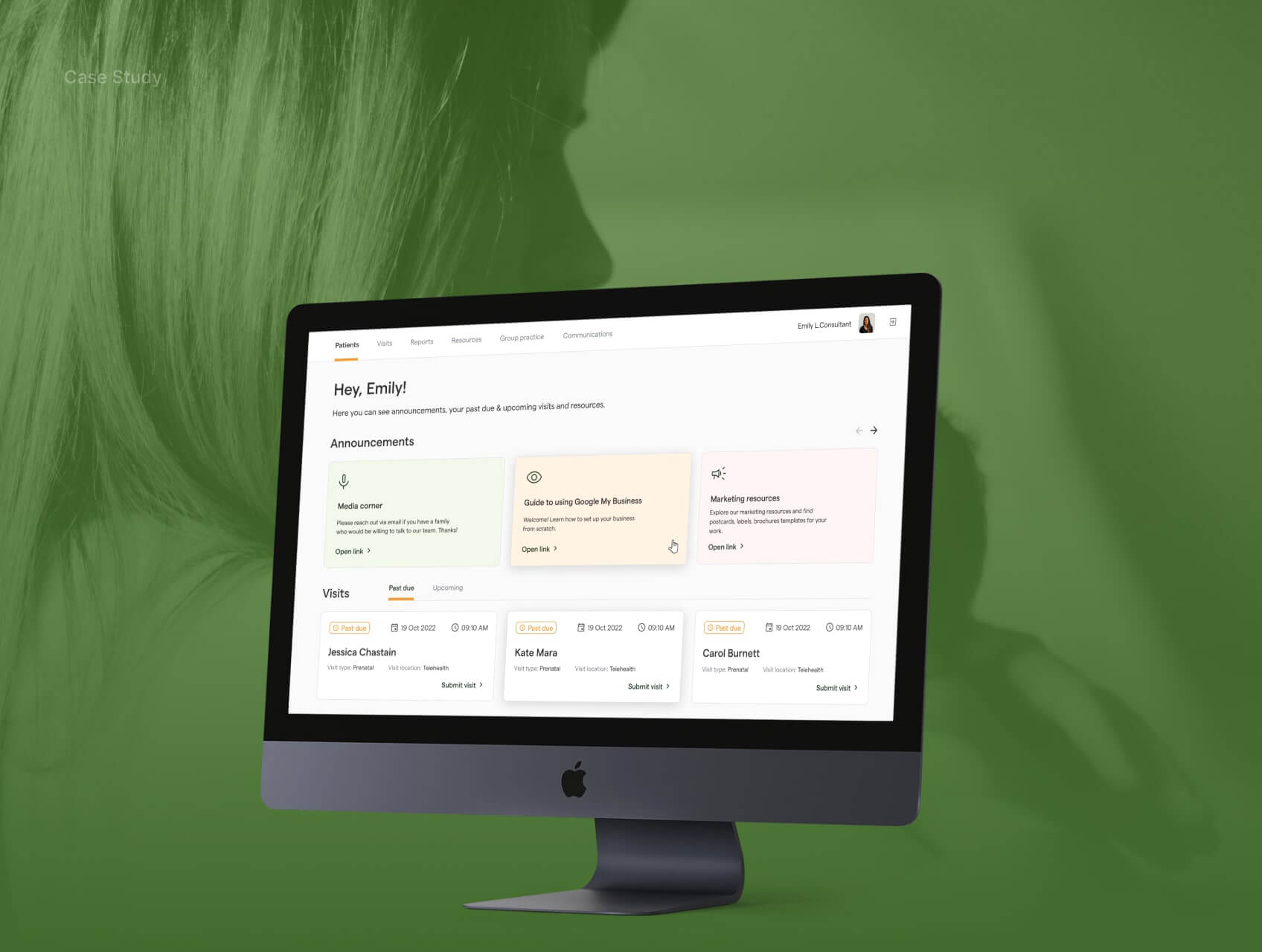
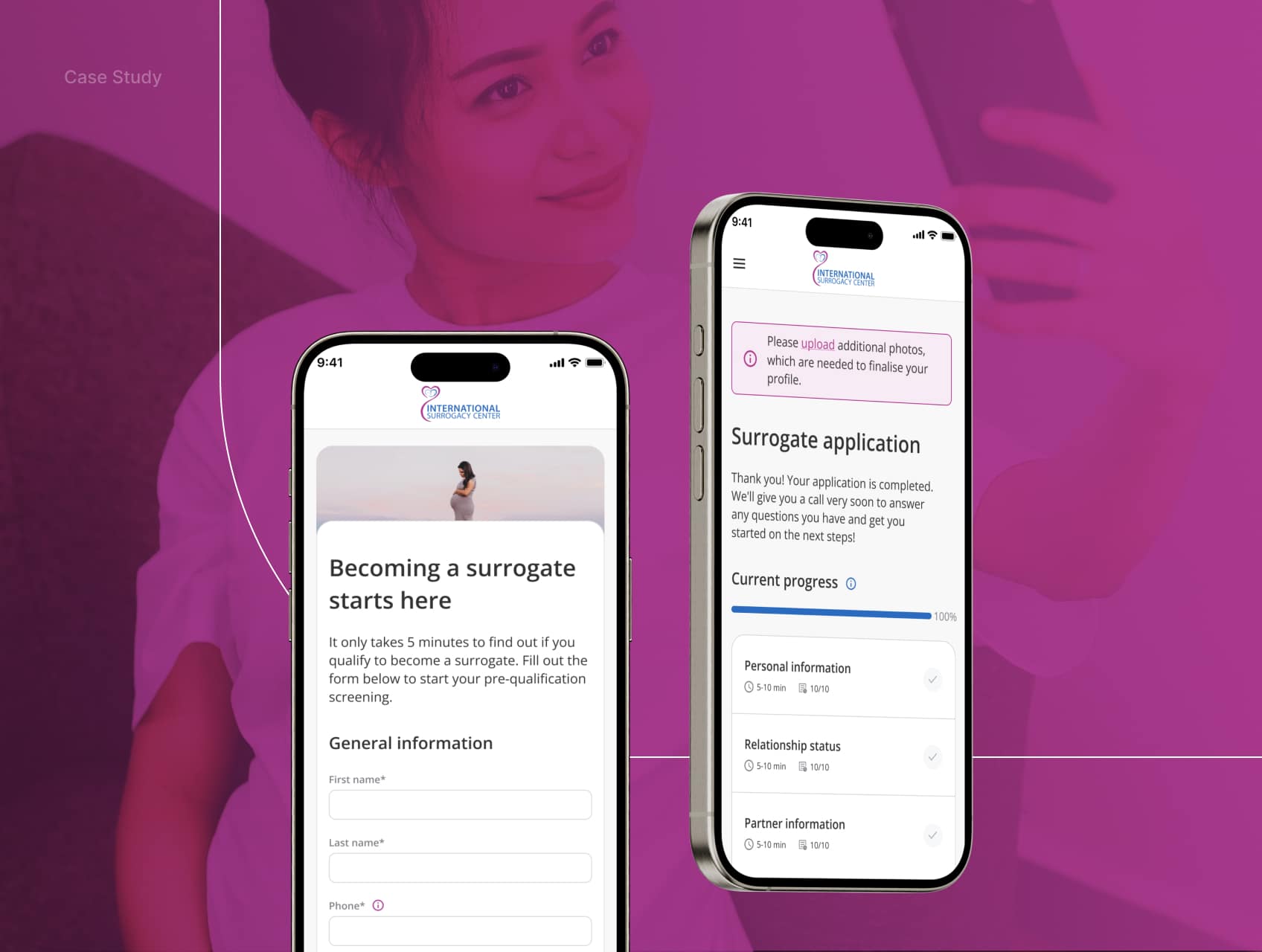
Read the stories of healthcare organizations that worked with our telehealth software development company.
Seamless EHR, HL7 FHIR & telehealth ecosystem integrations
EHR and EMR integration
HL7, FHIR, and TEFCA interoperability
Telehealth and communication layer
Identity, payer, and device connections

Technologies behind our telemedicine projects
-
 AWS
AWS - .NET
- Node.js
- React
-
 Medplum
 - CloudWatch
- KMS
-
 Salesforce
 -
 Epic
Epic -
 Oracle Health
 -
 Athenahealth
 -
 NextGen
 -
 Mirth Connect
 -
 Redox
Redox








MindK ready-made AI agents and building blocks
Patient engagement
Checks in with patients between visits, nudges care-plan and medication steps, and escalates to a clinician when a response warrants it.
Ambient scribing
Listens during the visit and turns the conversation into a structured, EHR-ready draft note for the clinician to review and sign.
Scheduling automation
Matches patients to real clinician availability and handles reminders, rescheduling, and cancellations without staff involvement.
Care-pathway triggers
Watches encounter and monitoring data for defined milestones and automatically fires the next step in a patient's care plan.
Clinical knowledge navigation
Surfaces relevant clinical guidelines, coding references, and documentation templates to the clinician in the moment they're needed.
Eligibility checks
Verifies a patient's insurance coverage before the visit so staff aren't chasing it down after the fact.
Verification of benefits
Confirms plan-specific coverage details and patient financial responsibility ahead of the encounter.
Medical billing
Structures claims-ready encounter data and flags coding or billing issues before they become denials.

Telehealth app development
services that meet HIPAA,
GDPR & SOC 2
so you're positioned ahead of it rather than scrambling to retrofit when it finalizes.
AI features built for the regulatory line
HIPAA Security Rule update readiness
GDPR for products serving EU users
SOC 2 readiness
Controlled-substance prescribing, ready for the DEA transition
Multi-state licensure handled in the platform
Secure cloud foundation

Our proven telemedicine software development process
Discovery and scoping
Duration: 1–2 weeks
We map the care problem, define the success metrics, and find where AI adds real leverage. AI handles meeting capture, requirements structuring, and market research, which compresses the part of discovery that usually drags. What you get back is a plan, not a sales proposal.
Infrastructure and environment setup
Duration: 1-2 weeks
HIPAA-grade cloud, CI/CD, security hardening, and monitoring, provisioned as code so the environment is reproducible from day one. AI generates the scaffolding; engineers validate every decision before it ships.
Iterative delivery
Scrum sprints, with AI accelerating code generation, debugging, test creation, and documentation across each cycle. Engineers own every architectural call and quality gate, so speed never comes at the cost of control. You see working software every sprint.
Testing and launch
Duration: 1–2 weeks for a focused MVP
AI-assisted UAT, self-healing E2E tests that adapt as the UI changes, and automated release notes. Compliance and security checks run as part of the release, not as an afterthought.
Post-launch support and scaling
Duration: ongoing.
AI-assisted monitoring flags issues and surfaces refinements, which keeps ongoing cost low without a standing team on retainer. You own the running system and the roadmap.

Why product teams build telemedicine with MindK
Deep industry expertise
As a telehealth app development company that runs its own healthcare products, we bring reusable assets that de-risk your build.
3-4x faster to market
Ready-made blocks and AI-accelerated build cut delivery time, so your runway goes to the product that differentiates you instead of the plumbing that doesn't.
You own the IP, not a license
The code, the data, and the architecture are yours outright, including the AI agents as configured and customized into your product.
Compliance and interoperability
HIPAA-grade and EHR-interoperable out of the box, so adoption moves past the low-value pilot that compliance gaps and integration friction usually trap it in.
What
our
clients
say
-

Allison Erickson
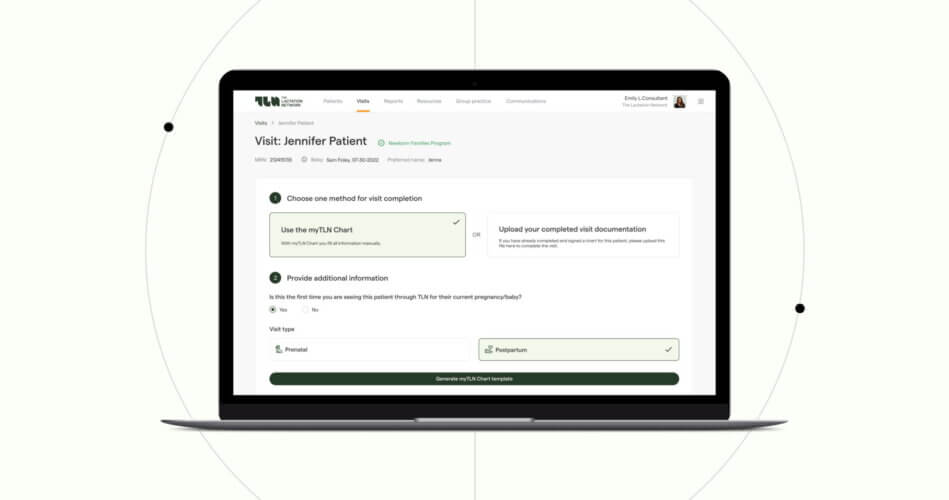
Director of Product, The Lactation Network
USA Such quality work in such efficient timing
«I have nothing but great things to say about our partnership with MindK and the solid work they have done and continue to do for the growth of our company. Our rapport is strong which is a reflection of their professionalism, hard work, and great outputs.»
-

Al Hariri
Co-Founder, Vitagene
USA Results-oriented and
outcome-driven«I can tell you confidently that they are different from your regular agency that just wants to charge as much money for their work as they can get away with. MindK is completely results-oriented and outcome-driven.»
-

Jason Lutton
CEO, International Surrogacy Center
Impressed with their ability to understand our industry
«MindK reduced the time a surrogate takes to complete an online application, increased the number of completed applications, and streamlined our intake process, resulting in fewer staff man hours needed to complete the backend processes for finalizing an applicant.»



Insights for HealthTech Founders & CTO
Get your telemedicine product to market without starting from zero
Share your ideas and challenges. We will reply within 24 hours to set up a free strategy session with mental health app developers who have shipped compliant healthcare products.
FAQ
- How much does custom telemedicine software development cost?
Custom telemedicine software development usually starts from $80,000 and can reach $200,000+ for a full-featured platform with EHR/EMR integrations, secure video consultations, scheduling, payments, patient portals, analytics, and advanced automation.
The final cost depends on the number of user roles, clinical workflows, integrations, compliance requirements, video functionality, mobile app scope, and whether we can accelerate delivery with existing healthcare components. We usually begin with discovery to define the right scope, architecture, timeline, and budget before development starts.
- How long does it take to build a telehealth app?
A focused telehealth MVP can often be launched in 8 to 16 weeks, depending on complexity. A larger platform with custom workflows, third-party integrations, mobile apps, admin panels, analytics, and compliance-heavy architecture may take 4 to 9+ months.
To reduce time to market, we build in short iterations, prioritize the highest-value features first, and use AI-assisted engineering practices for requirements analysis, documentation, testing, infrastructure setup, and development acceleration.
- Do you build fitnHow do you ensure HIPAA compliance in telemedicine software?ess apps for both iOS and Android?
We design telemedicine platforms with HIPAA requirements in mind from the architecture stage. This includes secure authentication, role-based access control, encryption in transit and at rest, audit logs, access monitoring, secure data storage, backup policies, PHI handling rules, and infrastructure hardening.
We also help define how PHI moves across the system, which vendors may access it, and what safeguards are needed for video, messaging, EHR integrations, notifications, and analytics. HIPAA compliance is treated as a product and engineering requirement, not as a final checklist before launch.
- Can you integrate our telehealth platform with existing EHR/EMR systems?
Yes. We integrate telehealth platforms with EHR, EMR, billing, scheduling, CRM, lab, pharmacy, and patient engagement systems. Depending on your environment, we can work with FHIR, HL7, SMART on FHIR, custom APIs, integration engines, and secure data pipelines.
Typical integration scenarios include syncing patient demographics, appointments, clinical notes, visit summaries, consent forms, care plans, insurance details, billing data, and provider availability. We also account for data mapping, access permissions, auditability, and long-term maintainability.
- What video technology do you use for virtual consultations?
We usually build video consultations using WebRTC-based technology and HIPAA-eligible infrastructure or vendors. Depending on the product requirements, we can work with platforms such as Twilio Video, Vonage, Daily, Agora, AWS Chime SDK, Zoom SDK, or a custom WebRTC implementation.
The choice depends on your needs for call quality, recording, waiting rooms, multi-party visits, screen sharing, mobile performance, bandwidth adaptation, cost, compliance, and integration with the rest of the care workflow.
- Do you build both web and mobile telemedicine apps?
Yes. We build telemedicine platforms for web, iOS, and Android. A typical solution may include a patient mobile app, provider web portal, admin dashboard, scheduling module, video consultation flow, secure messaging, intake forms, notifications, and integrations with existing systems.
Depending on the goals, we can build native mobile apps or use cross-platform frameworks such as React Native or Flutter to reduce development time and cost.
- Do you sign a BAA before starting?
Yes. We can sign a Business Associate Agreement before working with PHI or accessing systems that contain protected health information.
We also help identify which third-party vendors may need to sign BAAs, especially for cloud hosting, video consultations, messaging, analytics, monitoring, support tools, and other services involved in handling PHI.
- Do you provide post-launch support for telemedicine platforms?
Yes. After launch, we can support the platform with monitoring, bug fixes, performance optimization, security updates, infrastructure maintenance, user feedback analysis, feature improvements, and integration support.
We can also help your team plan future releases based on real usage data, operational bottlenecks, provider feedback, and patient behavior.
- Who owns the source code after the project is completed?
You own the source code, product documentation, and project assets created for your platform after the agreed project terms and payments are completed.
We build with long-term ownership in mind, so your internal team or another vendor can maintain and extend the product if needed. This includes clean architecture, technical documentation, environment setup, and knowledge transfer.
- What engagement models do you offer for telemedicine app development?
We offer several engagement models depending on your product stage and internal capabilities.
For early-stage ideas, we can start with product discovery to validate workflows, define scope, design the architecture, and prepare a realistic roadmap. For companies that need to launch quickly, we can provide an AI-accelerated MVP team focused on fast delivery. For complex platforms, we can assemble a cross-functional Scrum team with developers, QA, DevOps, product, design, and architecture experts. For existing telehealth products, we can provide dedicated engineering support, integrations, modernization, AI automation, or post-launch improvement.